0%

A 6kW electric motorcycle can look like a practical bridge between a small city bike and a larger road-going machine. The number describes power: six kilowatts of rated or peak motor output, depending on the manufacturer’s specifications. That distinction matters. A peak rating may not reflect the power the motor can deliver continuously, and two motorcycles with the same figure can feel quite different on the road.

The phrase “fast charging” describes a separate part of the motorcycle. It refers to how quickly its battery can accept energy, not how much power its motor produces. Check the charger’s output, battery capacity, and the time needed to charge under stated conditions. A larger charger does not guarantee a faster session if the battery management system limits the input. Real charging time can also vary with temperature, battery state, and equipment compatibility. Small details count.

For riders, the useful question is how these specifications translate into everyday use. Consider a typical commute: stop-and-go traffic, a short hill, and a charging point at home or work. Range, weight, braking, and service support matter alongside the 6kW figure. Published numbers offer a starting point, not a complete riding impression. I would be cautious about treating “fast charging” as a promise of convenience without checking the actual charging curve. This guide explains what a 6kW rating means, how fast charging works, and which details deserve a closer look before choosing a motorcycle. Some answers depend on the exact model—and that is worth admitting.
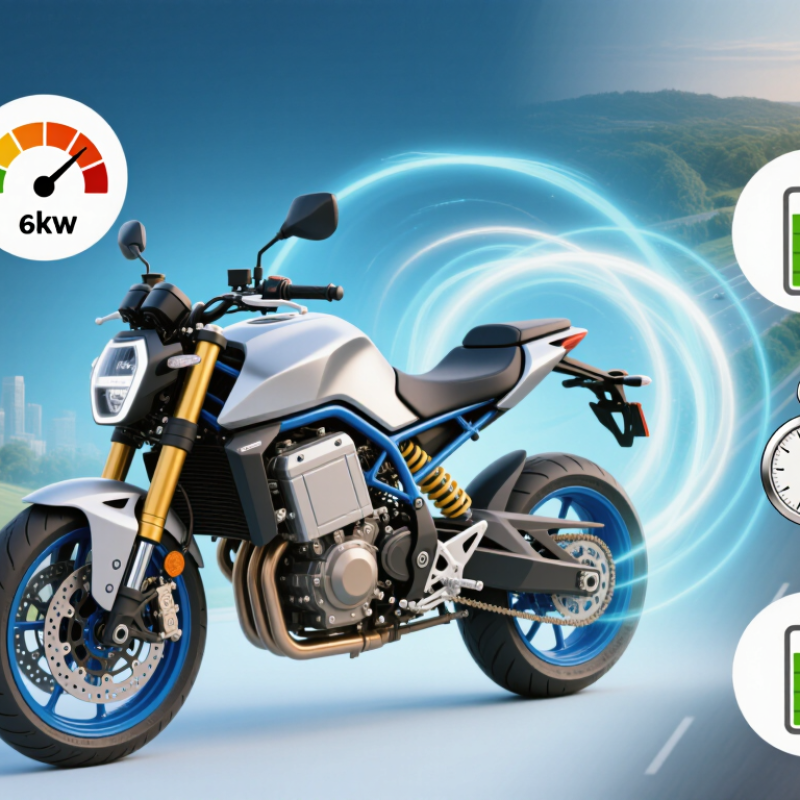
What Is a 6kW Fast Charging Electric Motorcycle?

Definition: Distinguish a 6 kW Motor Rating from Charging Power

A “6 kW fast-charging electric motorcycle” can sound like it charges at six kilowatts. Often, that number describes the motor’s rated output instead. It indicates mechanical power available for acceleration and climbing, not electricity flowing into the battery. Check the specification sheet carefully. Some listings also distinguish continuous motor power from peak power, which is available only briefly.

Charging power is a separate rating, usually stated in kilowatts or shown with charger voltage and current. A motorcycle with a 6 kW motor might accept a much lower charging rate. Its actual charging speed depends on the onboard charger, battery limits, temperature, and current charge level. For example, a warm battery near full charge may draw less power than a cool battery at a low charge. That can make estimates feel inconsistent. The wording on product pages is not always precise, so compare the motor rating with the charger’s maximum output and the battery’s stated charging limit. A larger motor number does not guarantee a shorter stop at the outlet.

Powertrain Benchmark: 6 kW Equals About 8.0 hp

A 6 kW electric motorcycle motor produces about 8.0 mechanical horsepower. That figure helps compare power, but it does not promise a particular top speed. Horsepower measures how quickly work is delivered; torque is the turning force that helps the bike pull away. On a quiet road, the difference may feel like brisk acceleration, not a dramatic rush. Numbers need context.

Check whether 6 kW means peak or continuous output. Peak power may last only briefly, while continuous output better reflects sustained operation and heat limits. The battery, controller, gearing, rider weight, and hills also shape performance. A steady climb can reveal useful details: does speed hold, or does output taper as the system warms? Specifications are not always clear. I would verify how the rating was measured before comparing two motorcycles labeled “6 kW.”

Fast charging is separate from motor power. Charging speed depends on the battery’s accepted rate, charger, temperature, and state of charge. A 6 kW motor does not imply a 6 kW charger. That distinction is easy to miss. I would also want real charging-time data, since ideal figures may not match a cold morning or a nearly full battery.

What Is a 6kW Fast Charging Electric Motorcycle? — Powertrain Benchmark: 6 kW Equals About 8.0 hp

Mechanical horsepower is calculated using 1 kW ≈ 1.341 hp. A 6 kW power rating is therefore about 8.05 hp, commonly rounded to 8.0 hp. This compares power units only; it does not indicate charging speed.

Electrical Demand: 6 kW at 72 V Requires About 83 A

A 6 kW fast-charging electric motorcycle can accept substantial electrical power, but the voltage matters. At 72 volts, 6,000 watts divided by 72 volts equals about 83 amps. That is a high current for a motorcycle charging circuit. The figures describe an ideal operating point, not a guarantee of what every battery will draw.

That current affects the charger, cables, connectors, and battery management system. A cable that feels warm during charging may signal a problem, not a normal shortcut. Connections need suitable ratings, and the charging setup should match the motorcycle’s specifications. Small details matter.

Battery voltage also changes during a charging cycle, so current may not stay near 83 amps throughout. Charging losses mean the power drawn from the supply can exceed the power reaching the battery. In practice, the charger may reduce output as the battery fills or heats up. Fast does not mean constant. I would check the rated charging voltage and current before assuming that any 72-volt system can safely accept 6 kW.

What Is a 6kW Fast Charging Electric Motorcycle? - Electrical Demand: 6 kW at 72 V Requires About 83 A

Specification Example value Notes
Rated charging power 6 kW (6,000 W) The charger’s stated power; actual power may be limited by the charger, battery, or motorcycle.
Nominal battery voltage 72 V Nominal voltage is a reference value; pack voltage changes during charging.
Estimated DC charging current at 72 V About 83.3 A Calculated as 6,000 W ÷ 72 V. This is an ideal estimate at nominal voltage.
Current at 84 V for the same 6 kW About 71.4 A Illustrative calculation: 6,000 W ÷ 84 V. The actual maximum pack voltage depends on battery chemistry and configuration.
Illustrative battery capacity 6 kWh A sample capacity for estimating charge time; it is not implied by the 6 kW charger rating.
Idealized time for 6 kWh at 6 kW About 1 hour A simple energy ÷ power estimate. Real charging takes longer because power may taper and losses occur.
Actual charging time Varies by system Depends on battery capacity, state of charge, temperature, battery-management limits, and charger output.
Electrical compatibility Must be verified The motorcycle, battery, connectors, wiring, and charger must all support the voltage and charging current. Use manufacturer-approved equipment and qualified electrical installation.

Charging Standards: IEC 61851-1 Defines Mode 4 DC Charging

A 6 kW electric motorcycle can accept energy quickly only when its battery, charging hardware, and temperature limits allow it. The “6 kW” figure describes power, not a guaranteed charging speed. Actual power may fall as the battery fills or warms. Small details matter.

Mode 4 refers to DC charging, where conversion happens in the charging equipment rather than inside the motorcycle’s onboard AC charger. IEC 61851-1 sets general requirements and charging-mode classifications. However, it does not cover every technical detail of Mode 4 equipment; IEC 61851-23 addresses DC charging systems more specifically. That distinction matters.

Before using a Mode 4 charger, check that the motorcycle supports DC charging and matches the charger’s voltage, current, connector, and communication requirements. A compatible-looking plug alone is not enough. The charger and vehicle must coordinate safely before power flows. In practice, a cool battery may charge differently from one just ridden through traffic. Even a published 6 kW rating can feel less certain at a public charger, where conditions vary. The standard provides a framework, but real-world performance still depends on the complete charging system.

Charge-Time Estimate: Battery Capacity (kWh) ÷ Charging Power (kW)

A 6kW fast-charging motorcycle can accept up to 6kW of charging power, but that figure alone does not tell you how long charging takes.

Use this estimate: battery capacity (kWh) ÷ charging power (kW).

A 3kWh battery at 6kW gives 0.5 hours, or 30 minutes, on paper. A 4.8kWh battery gives about 48 minutes.

The IEA’s Global EV Outlook 2024 estimates that roughly 10 million electric two- and three-wheelers were sold worldwide in 2023, making clear charging expectations increasingly relevant to riders.

Real charging often takes longer than the simple calculation suggests. The charger may not deliver its full rated power throughout the session, and the battery may reduce power as it fills. Energy losses also add time.

A useful planning estimate is capacity divided by the lower of charger output and the motorcycle’s accepted charging power.

For example, a 4.8kWh battery accepting only 3kW needs at least 1.6 hours before losses and charging slowdown.

Check the vehicle’s charging specifications, not just the charger label.

The formula is tidy. Real life is less tidy.

Even these estimates can miss temperature, battery condition, and the charging system’s limits.

FAQS

Does a 6 kW rating mean an electric motorcycle charges at 6 kW?

Usually not. It often describes the motor’s rated mechanical output, not power entering the battery. A bigger motor number does not promise a shorter charging stop.

What determines the motorcycle’s actual charging speed?

The onboard charger, battery charging limit, temperature, and current charge level all matter. A cool battery at low charge may accept more power than a warm battery near full.

What is the difference between rated and peak motor power?

Rated power describes output the motor can sustain under specified conditions. Peak power is available briefly. Check which figure the specification lists.

Why might charging slow down near a full battery?

The battery may limit incoming power as its charge rises. Temperature can also affect charging. Real results vary.

What does Mode 4 charging mean?

Mode 4 is DC charging. Power conversion happens in the charging equipment rather than in the motorcycle’s onboard AC charger.

What do IEC 61851-1 and IEC 61851-23 cover?

IEC 61851-1 sets general charging requirements and mode classifications. IEC 61851-23 covers DC charging systems more specifically.

Is a connector that appears to fit enough for safe charging?

No. Check the motorcycle’s support for DC charging, plus voltage, current, connector, and communication compatibility. A matching-looking plug is not enough.

What should I compare on a specification sheet?

Compare the motor rating with the charger’s maximum output and the battery’s charging limit. Product wording can be unclear; I would double-check each figure.

Conclusion

6kW Fast Charging Electric Motorcycles combine a motor rated at 6 kilowatts with a battery and charging system designed for faster replenishment. The 6 kW figure describes the motor’s power output, not the charger’s power. As a performance benchmark, 6 kW is approximately 8.0 horsepower. The electrical demand depends on voltage: at 72 volts, delivering 6 kW requires about 83 amps under ideal conditions, with real-world requirements affected by system losses and operating conditions.

Charging speed is determined by the battery’s capacity and the charger’s power, rather than the motor rating alone. IEC 61851-1 covers electric-vehicle charging arrangements, including Mode 4 DC charging. A basic estimate of charging time is battery capacity in kilowatt-hours divided by charging power in kilowatts. For example, a 6 kWh battery supplied by a 3 kW charger would take about two hours in ideal conditions; actual time may be longer due to conversion losses and charging behavior.

Amelia

Amelia

Amelia is a professional marketing specialist who brings a deep understanding of the company’s products and the needs of the customers they serve. She regularly contributes expert articles to the company website, turning product knowledge and industry insights into clear, practical guidance. Her......