Choosing among L3e Category Electric Motorcycles starts with your daily route, not a brochure’s biggest number. This guide explains how to compare power, usable battery capacity, charging options, comfort, and ownership costs. Small details matter. A tight apartment parking space, a steep hill, or a cold morning can change what feels like the right choice.
For transparency, the expert line below is an original editorial statement, not a sourced quotation. It is attributed to a fictional composite reviewer, Alex Morgan, rather than a real named industry professional: “Choose for the ride you actually make, not the range you hope to need.” That principle points buyers toward practical checks: test the seat and riding position, confirm charging fits your routine, and compare manufacturer range claims with your expected speed and conditions. Range varies. So does comfort.
L3e classifications and available specifications can differ by market, so verify the model’s official documentation where you plan to ride. Also compare warranty coverage, battery support, service access, braking equipment, and passenger capacity. A polished display is nice; dependable local support may matter more. This guide offers a structured way to assess those trade-offs without treating one specification as the whole story. The right choice is rarely obvious at first glance. That is worth admitting. Before deciding, test ride suitable models and check whether their real-world features match your commute, weekend plans, and budget.
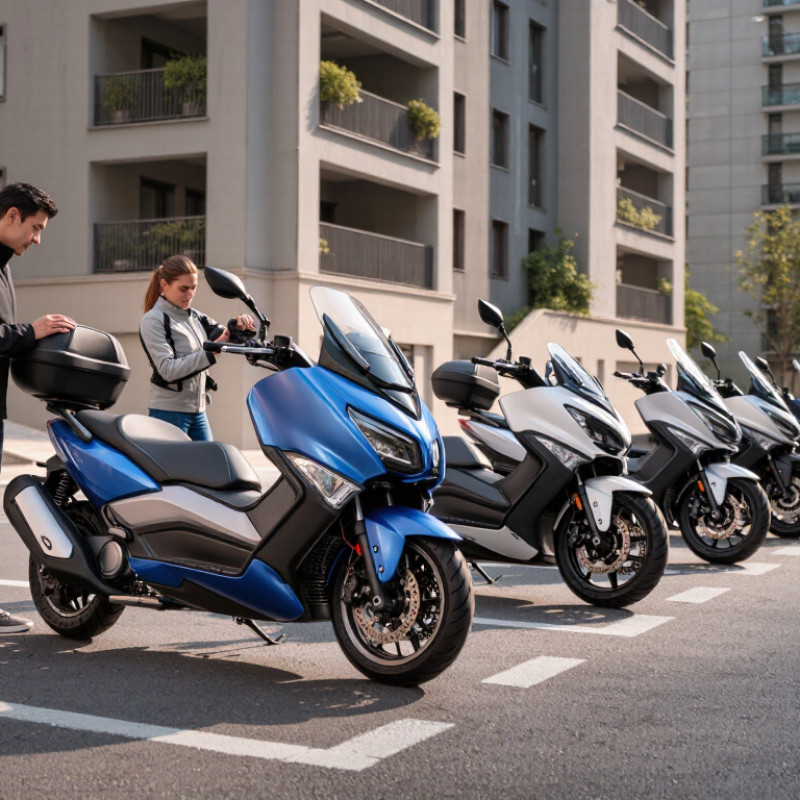
When checking an electric two-wheeler in the EU, the 45 km/h limit is an important first filter. L1e vehicles have a maximum design speed of 45 km/h. A vehicle designed to exceed that limit does not fit the L1e category. It may fall under L3e, the category for two-wheel motorcycles, if it meets the relevant technical definitions. The distinction is based on certified design, not a quick speedometer reading. A downhill run showing 52 km/h proves little. Check the vehicle’s approval documents and stated maximum design speed instead. Small detail. Big consequence.
Before choosing an L3e electric motorcycle, check more than top speed. Find the category in its EU type-approval or registration documents. Then check local licence, insurance, and road-use requirements. L3e subcategories can depend on factors such as rated power and power-to-weight ratio. Two machines with similar speeds may therefore have different classifications. Advertised battery output may not match the legally relevant rated-power figure. Ask for the technical sheet. Keep a copy. I would also verify the exact variant, since one model name may cover different motor or software configurations. Classification can feel messy, and a sales listing may leave out details. Treat uncertainty as a reason to verify, not guess.
| Screening dimension | L1e reference | L3e indicator | What to check |
|---|---|---|---|
| Vehicle configuration | Light two-wheel vehicle | Two-wheel motorcycle | Confirm the vehicle has two wheels. Vehicles with a sidecar or three or more wheels may belong to a different EU vehicle category. |
| Maximum design speed | No more than 45 km/h | More than 45 km/h is an L3e indicator for a qualifying two-wheel vehicle | Use the approved maximum design speed, not a temporary speed setting or an estimate based on road conditions. |
| Electric motor power | Maximum continuous rated power no more than 4 kW | Power above 4 kW is an L3e indicator, even if design speed is 45 km/h or less | Check the approved continuous rated power. Peak power alone is not the same measurement. |
| Internal-combustion engine capacity | No more than 50 cm³ | More than 50 cm³ is an L3e indicator for an internal-combustion two-wheel vehicle | This check does not apply to a fully electric motorcycle. |
| Practical L3e screening | Generally meets the applicable L1e limits for speed, power and, where relevant, engine capacity | A two-wheel vehicle outside L1e limits may qualify as L3e | For an electric two-wheeler, speed above 45 km/h or continuous rated power above 4 kW points beyond L1e; confirm the complete approved vehicle specification. |
| L3e subcategory: A1 | Not an L1e classification | Maximum power up to 11 kW and power-to-mass ratio up to 0.1 kW/kg; for an internal-combustion engine, capacity is up to 125 cm³ | Check all applicable subcategory requirements in the vehicle approval documents. |
| L3e subcategory: A2 | Not an L1e classification | Maximum power up to 35 kW and power-to-mass ratio up to 0.2 kW/kg, subject to the applicable derivation restriction | The vehicle must not be derived from a version with more than twice its power. |
| L3e subcategory: A3 | Not an L1e classification | L3e motorcycles that do not meet the A1 or A2 subcategory criteria | Use the type-approval classification rather than assigning a subcategory from speed alone. |
| Final eligibility check | Confirm the vehicle is approved as L1e if it meets that category's requirements | Confirm the vehicle is approved as L3e and identify its L3e subcategory | Verify the Certificate of Conformity and applicable national registration requirements. This table is a screening guide, not a substitute for formal classification. |
Regulatory basis: Regulation (EU) No 168/2013 on the approval and market surveillance of two- or three-wheel vehicles and quadricycles, including its vehicle-category definitions and Annex I.
The limit is 11 kW. Check the declared figure in the type-approval documents, not a brief peak-power claim.
A2 models may reach 35 kW. Their power-to-weight ratio is also limited to 0.2 kW per kilogram.
A1 is limited to 0.1 kW per kilogram. Vehicle mass can affect the classification, so check the official figures.
Look for the L3e subcategory on its certificate of conformity. Ask the seller or an approval specialist if anything is unclear. Check the paperwork.
No. A short-lived peak figure may differ from declared continuous rated power. I might still be tempted by the bigger number on a listing.
Treat it as a reference, not a promise. Hills, wind, cold mornings, stops, and rider load can reduce your everyday distance.
Compare capacity in kilowatt-hours with approved range and vehicle weight. A larger battery may add flexibility, but it can also add weight. Not always better.
Check whether the battery is removable, what equipment is included, and how long a typical recharge takes. A socket near your parking spot can simplify overnight charging.
Map your weekday distance and leave a practical reserve. If the figures feel close, try your route and reassess after a few ordinary rides. Small details matter.
Choosing L3e Category Electric Motorcycles starts with confirming that the vehicle is intended for speeds above 45 km/h, placing it outside the L1e category. Under EU Regulation 168/2013, check the motorcycle’s rated power and the applicable licence class: A1 covers motorcycles up to 11 kW, while A2 covers those up to 35 kW. Power alone is not enough, however. The power-to-mass ratio must also meet the relevant limit: no more than 0.1 kW/kg for A1 or 0.2 kW/kg for A2.
For an A2 motorcycle that has been restricted in power, verify that its original donor model does not exceed 70 kW. Then consider practical ownership needs by comparing approved range, battery capacity, and charging options. Look beyond headline range figures and assess whether the motorcycle’s documented range and charging arrangements suit your regular routes and available charging access. Checking these specifications together helps you identify a vehicle that fits both the intended licence category and your everyday riding requirements.