0%

Sourcing an RGNT Turbo Electric Motorcycle requires more than finding a striking photograph online. The process begins with verified availability, seller credentials, and a clear understanding of the motorcycle’s actual specification. RGNT Motorcycles is known for combining Scandinavian design with electric performance, while Jonathan Åström, the company’s founder and CEO, has described the brand’s ambition as creating “electric motorcycles with the soul of a real motorcycle.”

That idea matters when evaluating a Turbo model. A serious buyer should request the vehicle identification number, production year, battery capacity, charging equipment, warranty terms, and service history. Ask for recent photographs of the battery case, motor area, brake discs, tyres, and dashboard. Small details can reveal storage damage or neglected maintenance. A cold-start video is useful, but it is not a replacement for an independent inspection.

Check the seller’s relationship with RGNT or an authorised service network. Confirm whether software updates, replacement batteries, and diagnostic support are available in your region. Delivery costs may also include crating, insurance, registration, and specialist transport. These details can change the final price sharply.

The difficult part is comparing excitement with evidence. Some listings look complete but provide limited technical information. That should slow the purchase, not accelerate it. A test ride, written invoice, and transparent return policy add practical protection. Specifications may vary by market or production batch, so buyers should verify every claim directly with RGNT or a qualified dealer. That extra conversation can prevent an expensive assumption.
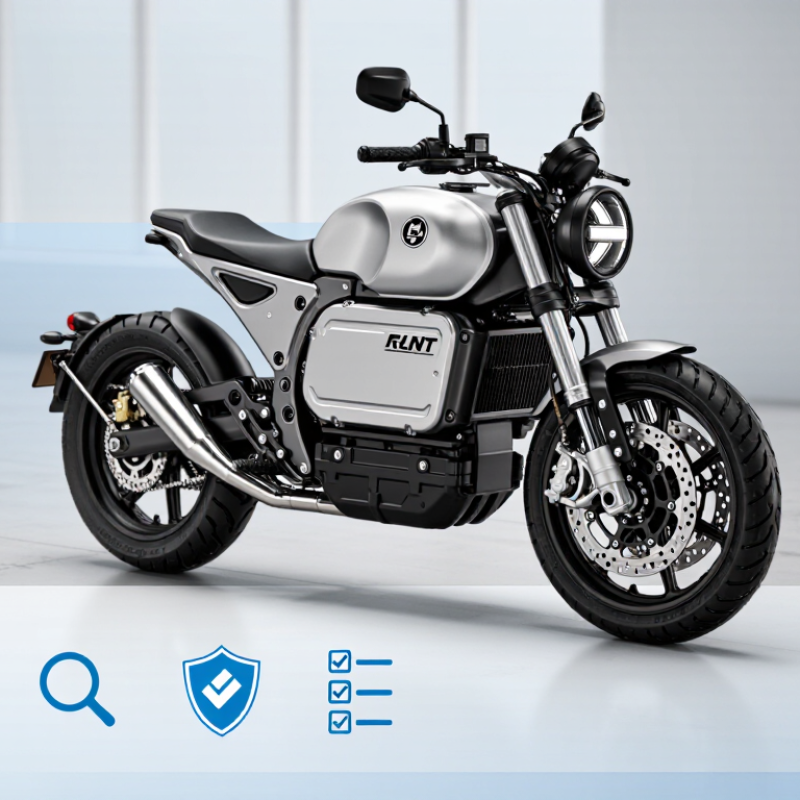
How to Source an RGNT Turbo Electric Motorcycle?

Define the RGNT Turbo’s 20 kW output and 9.5 kWh battery requirements

Sourcing a 20 kW electric motorcycle requires more than checking peak motor output. Ask suppliers to define continuous power, peak duration, torque, and thermal limits. A 20 kW peak system can draw about 278 amps at 72 volts. That demands strong busbars, reliable connectors, and careful heat management. The battery specification should state whether 9.5 kWh means nominal or usable capacity. This distinction changes real riding range.

BloombergNEF’s 2024 Battery Price Survey reported an average lithium-ion pack price of approximately 115 dollars per kWh. A simple calculation values a 9.5 kWh pack near 1,093 dollars, but motorcycle packs cost more at lower production volumes. Enclosures, battery management systems, cooling, testing, and certification add significant expense. Do not accept a supplier’s range claim without a test condition. The IEA’s Global EV Outlook 2024 highlights rapid electric vehicle growth, yet performance still depends heavily on weight, speed, temperature, and riding style. A practical sourcing brief should request 72- or 96-volt architecture, cell chemistry, usable energy, cycle-life data, and charging time. It should also require test reports at full load. Small details matter. I would question any quote that omits continuous power or thermal derating. The specification may still be incomplete. Real-world hill testing could expose weaknesses before production.

Turbo Electric Motorcycle Sourcing Requirements

The sourcing specification calls for a 20 kW electric motor output and a 9.5 kWh battery energy capacity. Because these requirements use different units, the chart displays them on separate vertical scales.

A suitable drivetrain supplier should therefore support at least 20 kW peak output, while the battery system should provide approximately 9.5 kWh of stored energy. Final sourcing should also verify continuous power, usable battery capacity, thermal management, and certification requirements.

Match the motorcycle to local L3e licensing limits, including the 11 kW A1 threshold

Sourcing a turbo-style electric motorcycle begins with its legal category, not its advertised acceleration. Under Regulation (EU) No 168/2013, an L3e-A1 motorcycle generally stays within 11 kW continuous rated power and 0.1 kW/kg power-to-mass ratio. For combustion models, 125 cc is also relevant, but electric approval depends mainly on power, weight, speed, and testing records. A motorcycle can look compact yet exceed the A1 limit after battery upgrades.

Check the conformity certificate, not only the product webpage. Ask for continuous power, peak power, curb mass, maximum design speed, battery voltage, and approval documents. The European Commission’s type-approval framework separates continuous output from short acceleration peaks. That distinction matters. A model advertising 20 kW peak power may still qualify for an A1 licence if its certified continuous rating remains within 11 kW, but local authorities may interpret the documentation differently. The European Environment Agency also stresses that real-world energy use varies with speed, temperature, and riding conditions. Range claims need cautious reading.

Tips: Request a VIN-linked certificate before paying a deposit. Confirm the exact L3e subclass with your local licensing office. Compare the rated figure at the rear wheel and the homologated figure. They may not match. I would also test the motorcycle with a full battery, rider weight, and typical hills; laboratory figures can feel optimistic, and that is worth questioning.

How to Source an RGNT Turbo Electric Motorcycle? - Match the motorcycle to local L3e licensing limits, including the 11 kW A1 threshold

Sourcing Dimension Verified Requirement or Data Point Why It Matters for Selection Documents or Evidence to Request
Vehicle classification Confirm that the motorcycle is classified as an L3e two-wheel vehicle under the applicable local type-approval framework. An L3e classification supports motorcycle registration, but licensing and registration rules still depend on the destination jurisdiction. EU type-approval certificate, certificate of conformity, vehicle category, VIN record, and registration documentation.
A1 power threshold Maximum continuous rated power: 11 kW for the EU A1 motorcycle category. A motorcycle above 11 kW continuous rated power generally cannot be treated as an A1 motorcycle in jurisdictions applying the EU framework. Power rating stated in the type-approval documentation, not only peak motor output shown in marketing material.
A1 power-to-mass ratio Power-to-mass ratio: no more than 0.1 kW/kg. The relevant mass and calculation method must follow the applicable approval rules. A model rated at 11 kW may still fail the A1 limit if its approved power-to-mass ratio exceeds the legal threshold. Approved mass figure, continuous rated power, and the manufacturer’s or approval authority’s ratio calculation.
A2 alternative For the EU A2 category, maximum continuous rated power is 35 kW and the power-to-mass ratio must not exceed 0.2 kW/kg. The motorcycle must not be derived from a vehicle with more than twice the restricted power. If the target market allows A2 licensing, a model outside A1 limits may still be eligible, subject to local approval and licensing rules. A2-compatible approval documentation, original power rating, restricted-power configuration, and evidence of the base vehicle’s unrestricted rating.
Unlimited motorcycle category Motorcycles exceeding A1 or A2 limits generally require the unrestricted motorcycle entitlement, often referred to as category A in EU licensing systems. The buyer’s licence must match the motorcycle’s approved category; an electric drivetrain does not automatically qualify for A1 or A2. Local driving-licence rules, minimum-age requirements, staged-access rules, and the vehicle’s approved power data.
Peak versus continuous power Separate maximum continuous rated power from temporary peak power. The 11 kW A1 limit is not automatically assessed using a short-duration peak figure. Advertising a low continuous rating with a substantially higher peak output can create licensing, insurance, and registration discrepancies. Motor specification sheet, approval test data, controller settings, firmware limits, and written clarification of continuous and peak values.
Speed and road-use configuration Check approved maximum design speed, lighting, mirrors, tyres, braking equipment, audible warning device, side-stand controls, and other road-equipment requirements. A vehicle suitable for private land or off-road use may not be legal for public-road registration in the destination market. Type-approval test reports, equipment list, tyre approval markings, braking test evidence, lighting approval, and road-registration checklist.
Battery and electric safety Request evidence that the rechargeable electrical energy storage system and electric powertrain meet the safety requirements applicable to L-category vehicles in the destination market. Battery safety, charging protection, electrical isolation, and thermal-event controls affect approval, insurance, shipping, and after-sales support. Battery test reports, protection-system specifications, charging instructions, transport documentation, and applicable regulatory compliance declarations.
Range and charging verification Compare battery capacity in kWh, approved test-cycle range where available, charging time, charger rating, usable battery energy, and temperature assumptions. Range varies with speed, rider mass, temperature, terrain, tyre pressure, and payload; a single claimed distance is not sufficient for procurement. Battery nominal and usable capacity, independent range-test method, charge-time curve, charger specifications, and cold-weather performance data.
Destination-market registration Confirm whether the vehicle has EU type approval, national approval, individual approval, or no approval for the intended country. A vehicle can meet a technical specification yet remain difficult or impossible to register without the correct approval route. Certificate of conformity, approval number, VIN eligibility, import requirements, registration fees, insurance requirements, and inspection procedure.
Procurement decision rule Select the lowest licensing category that is fully supported by official documents: A1 ≤ 11 kW and ≤ 0.1 kW/kg; otherwise assess A2 or unrestricted category A eligibility. This prevents a mismatch between the motorcycle’s approved specifications, the rider’s licence, and the destination country’s registration rules. Written confirmation from the relevant registration authority or qualified local compliance specialist before purchase or import.

Note: The thresholds shown are the EU licensing baseline commonly used for A1 and A2 motorcycle categories. National age, training, licence-access, registration, insurance, and approval rules may differ and should be checked with the destination-country authority before sourcing.

Verify charging compatibility against IEC 61851 standards and local connector rules

How to Source an RGNT Turbo Electric Motorcycle?

Charging compatibility should be checked before comparing price, range, or delivery dates. Request the motorcycle’s charging voltage, maximum current, connector type, and charging mode in writing. Then compare those details with the EV supply equipment’s IEC 61851 requirements. The charger should communicate correctly through the control pilot circuit. It must also manage current safely during connection and charging. Do not assume a familiar plug guarantees compatibility.

Inspect the charging inlet and cable carefully. Check whether the system uses Type 2, Type 1, or another approved connector. Local rules may restrict household plugs, adapters, socket ratings, or outdoor charging equipment. Confirm the permitted voltage, earthing arrangement, residual-current protection, and required certification in your country. A qualified electrician should verify the installation before regular use. Small details matter.

Ask for test reports, wiring diagrams, and the charger’s protection specifications. Confirm that the motorcycle accepts the local grid supply without an unapproved converter. During inspection, look for heat marks, loose pins, damaged insulation, or a cable that feels undersized. I would also perform a supervised charging test with a compatible EVSE. Keep the battery partly charged during this check. A short test may miss thermal faults. That is an imperfect method, but it is safer than trusting photographs or sales claims alone. Record the connector, charging current, and fault response for future maintenance.

Check battery transport documents, including UN 38.3 and IEC 62133-2 compliance

How to Source an RGNT Turbo Electric Motorcycle?

Battery paperwork deserves close attention when sourcing an electric motorcycle. Ask for the exact battery model, not a generic certificate. The UN 38.3 test summary should identify the cell or battery, manufacturer, test laboratory, and revision number. It confirms transport testing, including altitude simulation, vibration, shock, and external short circuit. Check every detail against the battery label.

IEC 62133-2 is different. It evaluates the safety of rechargeable lithium cells and batteries during normal use and foreseeable misuse. It does not replace UN 38.3 transport testing. That distinction matters. A supplier may provide an IEC report while missing the required transport documentation. Request the complete report, certificate scope, and pack configuration. Photos of labels and packaging can expose small inconsistencies.

The International Energy Agency reported that global electric car sales approached 14 million in 2023, while battery demand grew by about 40%. More volume means more paperwork pressure. Do not rely on a PDF alone. Confirm the test report with the laboratory when possible, and verify that the shipping carton shows the correct lithium battery marks. I would also check the state of charge and carrier instructions before booking freight. This step is often rushed. That is where avoidable errors begin. A careful sourcing file should include the commercial invoice, packing specification, safety data sheet, UN 38.3 summary, and IEC 62133-2 evidence.

Industry reference: International Energy Agency, Global EV Outlook 2024; United Nations Manual of Tests and Criteria, Part III, subsection 38.3.

Compare dealer pricing, VIN records, warranty terms, and parts availability before purchase

Buying a turbo electric motorcycle requires more than comparing advertised prices. Ask several dealers for written, itemized quotes. Include the motorcycle, delivery, setup, registration fees, charger, and any battery-related charges. A low headline price may hide expensive preparation costs. Compare identical specifications, not just monthly payments.

Request the full VIN before paying a deposit. Check whether the number matches the frame, paperwork, and sales invoice. Available VIN records may reveal title history, reported damage, recalls, mileage, or previous registration. Confirm the warranty length, start date, coverage limits, and approved service locations. Ask whether the battery, motor, controller, charger, and display have separate coverage. Read exclusions carefully. Some warranties require scheduled inspections or use of approved parts. That detail is easy to miss.

Tips: Contact the service department, not only the salesperson. Ask how many common parts are currently in stock and the usual ordering time. Request prices for brake pads, tires, charging equipment, plastics, and a replacement battery. A dealer’s confident answer is useful, but written confirmation is safer. I would also inspect a demonstrator for panel gaps, charging faults, warning lights, and unusual motor noise. My checklist is not perfect, and battery health can be difficult to judge during a short ride. A pre-purchase inspection by a qualified technician adds evidence before money changes hands.

FAQS

What charging details should I request before sourcing an electric motorcycle?

Request the charging voltage, maximum current, connector type, and charging mode in writing. Do not rely on a familiar plug.

Why must charging compatibility be checked against IEC 61851 requirements?

The charger must communicate through the control pilot circuit. It must also regulate current safely during connection and charging.

Which connector and installation details require inspection?

Check for Type 2, Type 1, or another approved connector. Confirm voltage, earthing, socket ratings, and residual-current protection.

Can I use a household plug or adapter?

Local rules may restrict them. A qualified electrician should verify the installation before regular charging.

What should I inspect during a supervised charging test?

Look for heat marks, loose pins, damaged insulation, or an undersized cable. Record charging current and fault response.

Which battery documents should I request?

Request the exact battery model, UN 38.3 test summary, IEC 62133-2 evidence, and complete certificate scope.

What information should appear on a UN 38.3 test summary?

It should identify the battery, manufacturer, laboratory, and revision number. Compare these details with the battery label.

Does IEC 62133-2 replace UN 38.3 transport testing?

No. IEC 62133-2 addresses rechargeable battery safety during use. UN 38.3 addresses transport testing.

What shipping details should I verify before booking freight?

Check the battery state of charge, carrier instructions, lithium battery marks, invoice, packing specification, and safety data sheet.

Conclusion

Sourcing an RGNT Turbo Electric Motorcycle requires a careful review of its technical specifications, local regulations, and long-term ownership costs. Begin by confirming that the motorcycle meets the expected 20 kW power output and includes a 9.5 kWh battery. Then determine whether its performance fits the applicable L3e vehicle category and licensing requirements, especially where the A1 class is limited to 11 kW. This step helps ensure the motorcycle can be registered and operated appropriately in the intended market.

Charging and battery documentation should also be checked before purchase. Confirm compatibility with IEC 61851 requirements, local connector standards, and available charging equipment. Request battery transport and safety records, including UN 38.3 testing and IEC 62133-2 compliance documentation. Finally, compare dealer quotations, verify VIN records, review warranty coverage, and confirm the availability, cost, and delivery time of replacement parts. A structured evaluation can reduce unexpected expenses and support a safer, more practical purchase decision.

Charlotte

Charlotte

Charlotte is a professional marketing specialist who combines a strong understanding of the company’s products with a clear, reader-focused approach to communication. She regularly updates the company website with informative blog articles, helping customers learn about product features, practical......