China Top A1 License Electric Motorcycles for Global Buyers reflects a growing demand for practical, low-emission urban transport. These motorcycles combine compact dimensions, quiet motors, and rechargeable battery systems. They may suit commuters, delivery riders, and small-business users in suitable markets.
However, “A1 License Electric Motorcycles” does not mean the same thing everywhere. License categories, speed limits, power ratings, registration rules, and helmet requirements vary by country. Buyers should confirm local regulations before ordering. A reliable supplier should provide clear specifications, battery test information, charger details, warranty terms, and required conformity documents.
Details matter. A 72V battery may support stronger acceleration, while battery chemistry affects weight, range, and service life. Real-world distance can fall during cold weather, heavy loads, steep climbs, or frequent stops. Claimed range is not guaranteed.
Look closely.
Experienced buyers should inspect frame welds, brake components, tire quality, lighting, display accuracy, and waterproofing. After-sales support also deserves careful attention. Replacement batteries, controllers, brake pads, and diagnostic help can determine long-term ownership costs. Some attractive offers may hide limited parts availability or unclear warranty conditions.
This guide compares important features, supplier credibility, compliance documentation, and ownership considerations. It does not assume every Chinese model fits every market. Product quality can vary between factories and production batches. Independent inspection remains valuable, especially for fleet purchases. The best choice is not always the fastest or cheapest motorcycle. It is the model that matches legal requirements, daily routes, rider expectations, and dependable local support.
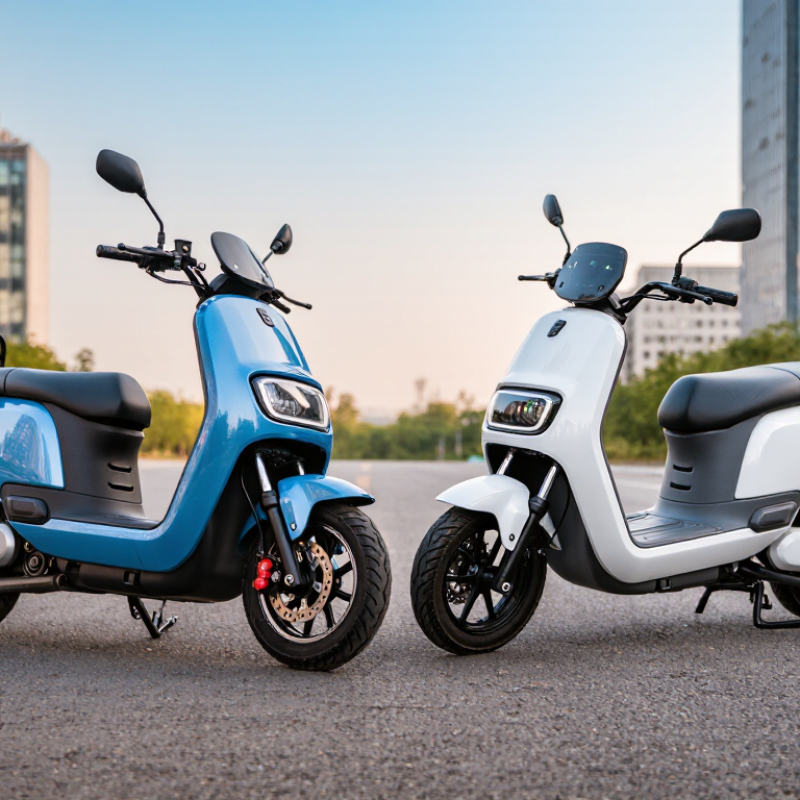
China Top A1 License Electric Motorcycles for Global Buyers
A1 does not mean the same thing in China and overseas. In China, motorcycle permissions usually use D, E, or F categories. A1 generally refers to a large passenger-vehicle license, not a standard motorcycle permit. Electric two-wheelers may instead fall under electric bicycle, electric moped, or electric motorcycle rules. Classification depends on rated power, maximum speed, pedals, dimensions, and local registration requirements.
This distinction matters during sourcing. A model with motorcycle-style performance may require a plate, compulsory insurance, inspection, and a motorcycle license in its Chinese operating region. Export buyers should request the technical specification sheet, continuous rated power, maximum design speed, battery details, conformity documents, and test reports. Do not rely on peak motor output alone. It can create a costly mismatch.
In the European Union, A1 commonly covers motorcycles up to 125 cc equivalent, 11 kW, and 0.1 kW per kilogram. Electric models must meet applicable type-approval, lighting, braking, noise, electromagnetic compatibility, and battery safety requirements. The United Kingdom uses similar A1 limits, while Australia and other markets apply different licensing and approval systems. Rules change. Sometimes, local wording is unclear. A competent importer should confirm the exact category with the transport authority before ordering, because a vehicle acceptable in China may need software limits, new testing, or different equipment abroad.
Identifying China’s top A1 license electric motorcycles requires more than checking advertised speed. A1 rules differ between countries, so confirm requirements with your local transport authority. Compare rated motor power, continuous output, maximum speed, vehicle weight, and power-to-weight ratio. Ask for official technical documents, not only showroom claims. The frame plate should match the certificate, battery label, and purchase invoice.
Inspect the motorcycle closely. Check welds around the head tube, swingarm, and battery compartment. Look for hydraulic disc brakes, suitable tires, bright lighting, mirrors, and stable suspension. Request battery chemistry, capacity, charging time, cycle testing, and warranty terms. A removable battery can simplify maintenance, but it may add movement and noise. Test the throttle at low speed. Smooth control matters more than dramatic acceleration. No checklist is perfect. Even experienced buyers can overlook charger compatibility or local registration costs.
Request a sample inspection report before ordering. Confirm spare-part availability, software language, shipping protection, and after-sales response times. Ask for independent test results when possible. Compare real-world range at normal speeds, not the highest laboratory figure. A short supervised road test can reveal braking weakness, steering vibration, or uncomfortable seating. These details often separate a compliant, dependable model from an attractive but unsuitable option.
China Top A1 License Electric Motorcycles for Global Buyers
For global buyers, power should match local A1 licensing rules, not marketing claims. These motorcycles commonly use continuous outputs around 5–11 kW. Peak power can feel impressive, but continuous power better reflects daily climbing and traffic performance. Check the registration category in your country before ordering. A1 limits vary widely.
Real-world range depends on rider weight, temperature, road slope, and speed. A battery between 6 and 12 kWh may deliver roughly 80–160 kilometers per charge. Treat laboratory figures carefully. Wind changes everything. Removable lithium batteries improve apartment charging, while fixed packs often support cleaner weight distribution. Ask for cell specifications, battery-management data, and a written warranty.
Safety needs more than bright lighting. Look for hydraulic disc brakes, dependable traction control, and a stable frame tested under load. Anti-lock braking can help, but it does not remove stopping risks on wet roads. Confirm the motorcycle’s certification documents, lighting requirements, charger compatibility, and spare-parts support. Charging usually takes four to eight hours with a standard home unit. A faster charger reduces waiting, yet it may increase heat and battery wear. Use a grounded circuit and the approved charger only. Small details matter. A supplier may quote a perfect range, but independent road testing is still worth requesting.
China Top A1 License Electric Motorcycles for Global Buyers
Export Compliance, Documentation, and Shipping Requirements for Global Buyers
Buying an A1-license electric motorcycle for export involves more than checking motor power and battery range. The buyer must confirm how the destination defines A1 eligibility, including rated power, speed, rider age, and licensing rules. Those limits vary by jurisdiction. They can also change. Ask the seller for a technical specification sheet, conformity evidence, battery chemistry details, and the vehicle identification number format. Request clear photographs of labels on the frame, charger, motor, and battery pack.
A reliable export file should include a commercial invoice, packing list, sales contract, certificate of origin, and transport insurance details. Depending on the route, customs may require a declaration of conformity, test reports, import permits, or translated manuals. Battery shipments need special attention. Lithium batteries are regulated cargo, so the carrier may request UN38.3 test evidence, a safety data sheet, and packaging records. Never accept vague promises that documents will be handled later. One missing battery document can delay a container at the port.
Before payment, compare every document with the motorcycle’s serial number and battery label. Check whether the charger voltage matches local electrical standards. Confirm crate dimensions, gross weight, lifting points, and battery placement during transport. A written pre-shipment inspection can catch loose wiring, damaged terminals, or incorrect labels. My review process is not perfect; translated terms sometimes create confusion. A local customs broker should verify the final route requirements. Keep digital and printed copies. That small habit helps.
| Compliance Area | Requirement or Data Point | Typical Evidence or Document | Primary Responsibility | Global Buyer Note |
|---|---|---|---|---|
| A1 License Classification | In mainland China, an A1 driving licence is for large motorcycles. It is a driver-licence category, not an international vehicle approval or export certificate. | Destination-country motorcycle licence rules and vehicle-registration requirements | Buyer and destination authority | Confirm the local licence class, minimum age, power limits, and registration category before placing an order. |
| Chinese Vehicle Legality | Verify whether the motorcycle has applicable Chinese road-vehicle approval and whether its configuration is intended for road use or off-road use. | Vehicle approval information, technical specifications, VIN details, conformity documents, and factory inspection records | Exporter or manufacturer | Chinese domestic approval does not automatically satisfy the buyer’s import or road-registration rules. |
| Destination Type Approval | Electric motorcycles may require vehicle type approval, individual approval, or national certification depending on the destination market. | Type-approval certificate, conformity certificate, test reports, lighting and braking reports, and technical construction file where applicable | Buyer, importer, and approval agency | For the European Union, L-category vehicle requirements may apply; other markets use their own road-safety frameworks. |
| Electrical and EMC Safety | The motor, charger, controller, lighting system, wiring, and electromagnetic compatibility must meet the standards required by the destination market. | Electrical safety test reports, EMC reports, charger specifications, wiring diagrams, and user manual | Manufacturer and importer | A charger approved for one country may not be suitable for another country’s voltage, plug, or certification requirements. |
| Lithium Battery Compliance | Lithium-ion batteries must be assessed for transport safety and correctly classified as shipped alone, packed with equipment, or contained in equipment. | UN 38.3 test report and test summary, battery specification sheet, SDS where requested, and dangerous-goods declaration where applicable | Battery manufacturer, exporter, and freight forwarder | A battery shipped separately is commonly treated as UN 3480; batteries packed with or contained in equipment may fall under UN 3481. Confirm the exact classification before shipment. |
| Battery State of Charge | Air transport may impose stricter lithium-battery requirements, including limits on state of charge and packaging. | Airline or freight-forwarder acceptance confirmation, compliant packaging, labels, and shipper’s declaration when required | Exporter and freight forwarder | Ocean freight is often selected for complete motorcycles because air transport of large lithium batteries can be restricted or costly. |
| Export Customs Documents | The shipment must be declared with accurate product descriptions, quantities, values, origin information, and the correct HS classification. | Commercial invoice, packing list, export customs declaration, purchase contract, and power-of-attorney document when used | Exporter or customs broker | The appropriate HS code depends on the vehicle configuration and destination rules; confirm it with a customs professional rather than relying on a generic code. |
| Origin Documentation | Proof of origin may be required for customs clearance, preferential tariff claims, or buyer records. | Certificate of origin or origin declaration, when required by the destination authority or trade arrangement | Exporter, chamber, or authorized issuing body | A certificate of origin does not replace vehicle type approval, safety certification, or import licensing. |
| Shipping and Dangerous Goods | Packaging, marking, labelling, booking, and documentation must follow the rules of the selected transport mode. | Packing certificate, dangerous-goods declaration when applicable, container details, cargo photographs, and transport booking confirmation | Exporter and freight forwarder | For ocean freight, the International Maritime Dangerous Goods framework may apply; carrier acceptance must be obtained before loading. |
| Transport Document | The shipment needs a transport document identifying the shipper, consignee, cargo, package count, and route. | Bill of lading for ocean freight or air waybill for air freight | Carrier or freight forwarder | Check that the consignee name, battery classification, package count, and gross weight match the commercial documents. |
| Vehicle Identification | Each road-legal motorcycle should have consistent identification across the vehicle, invoice, packing list, and approval documents. | VIN or chassis number, motor number where applicable, battery serial number, photographs, and inspection checklist | Manufacturer and exporter | Mismatched VIN, chassis, or battery information can delay customs clearance, registration, warranty claims, or insurance. |
| Importer and Registration | The importer may need a local business registration, importer number, tax identification, customs account, or product compliance representative. | Import licence or registration, customs power of attorney, conformity declaration, and local registration application | Buyer or local importer | Confirm who will act as importer of record and who will pay duties, taxes, port charges, inspection fees, and registration costs. |
| Commercial Terms | The contract should clearly allocate transport, insurance, customs, delivery, and risk obligations. | Sales contract, pro forma invoice, selected Incoterm, insurance certificate, and payment records | Buyer and exporter | Use the named place and version of the agreed Incoterm precisely; import clearance and local taxes should not be left undefined. |
| Pre-Shipment Inspection | Verify quantity, model configuration, battery capacity, charger type, VIN, accessories, packaging, and functional condition before dispatch. | Pre-shipment inspection report, photographs, test checklist, and signed acceptance record | Buyer, third-party inspector, and exporter | The inspection should confirm the exact configuration that will appear in the compliance and customs documents. |
| After-Sales and Recall Readiness | The importer should maintain records for spare parts, battery service, warranty handling, technical updates, and safety incidents. | Warranty policy, parts list, repair manual, battery handling instructions, service contacts, and incident-reporting procedure | Importer and manufacturer | Local consumer-protection, product-safety, battery-recycling, and recall obligations may continue after customs clearance. |
Important: Requirements vary by destination country, vehicle speed and power, battery configuration, transport mode, and intended road use. Confirm current rules with the destination customs authority, vehicle-registration authority, accredited testing body, and freight forwarder before shipment.
Buying an A1-class electric motorcycle requires more than comparing online prices. An A1 riding license does not automatically prove road approval in your country. Check your local rules for speed, power, battery transport, registration, and charging equipment before contacting suppliers.
Request the supplier’s business license, factory address, production qualifications, and recent test reports. Match the frame number, battery label, motor rating, and charger details across every document. Ask for a live factory video, not only edited photographs. A serious supplier should explain cell origin, battery protection, waterproof testing, braking performance, and spare-parts availability in clear language.
Use a paid sample before placing a large order. Measure its real range on your expected roads and record charging time, brake response, vibration, and display accuracy. Keep communication in writing. Specify battery warranty periods, replacement procedures, packaging standards, delivery terms, and inspection rights in the contract. Independent pre-shipment inspection is worthwhile. It can reveal loose connectors or damaged paint that factory images hide.
Do not trust confidence alone. I once considered a supplier with excellent samples but weak after-sales planning. That hesitation was useful. Ask how quickly they diagnose controller faults and whether technical manuals are available in English. Pay through traceable methods and link final payment to inspection results. Cheap units may become expensive when batteries, software, or parts are difficult to replace.
Confirm your local A1 rules first. Check rated power, maximum speed, weight, and power-to-weight ratio. Ask for official technical documents, not showroom claims. The rules may differ locally.
Match the frame number with the certificate, battery label, and invoice. Check the motor, charger, and battery markings too. Photograph every label before payment. Do not guess.
Examine welds around the head tube, swingarm, and battery compartment. Check hydraulic disc brakes, tires, lights, mirrors, and suspension. Look for loose wiring or damaged terminals. Small flaws matter.
Request the battery chemistry, capacity, charging time, cycle results, and warranty terms. Confirm the charger matches your local electrical standard. A removable battery may simplify maintenance. It can also create movement and noise.
Test the motorcycle at normal speeds on familiar roads. Record range, charging time, braking response, vibration, and display accuracy. Test the throttle gently at low speed. Smooth control matters more.
Prepare the invoice, packing list, sales contract, origin certificate, and transport insurance details. Some routes may require conformity evidence, test reports, translated manuals, or import permits. Battery shipments need specific safety records. Missing paperwork can delay cargo.
Request the business license, factory address, production qualifications, and recent test reports. Ask for a live factory video instead of edited photographs. Buy one paid sample before ordering many units. Confidence is not proof.
Specify warranty periods, replacement procedures, packaging standards, delivery terms, and inspection rights. Keep all important communication in writing. Link final payment to inspection results. My process is not perfect.
Confirm spare-part availability, software language, technical manuals, and response times. Ask how the supplier diagnoses controller or battery faults. Use independent pre-shipment inspection when practical. A cheap unit may become expensive.
This guide explains how global buyers can evaluate China’s top A1 License Electric Motorcycles for legal, practical, and reliable use. It introduces the main A1 licensing principles in China and selected export markets, while emphasizing that local requirements may differ regarding power output, speed, rider age, registration, insurance, and road access. Buyers will also learn how to compare models by motor performance, real-world range, battery chemistry, charging time, braking systems, lighting, structural quality, and rider safety features.
The article further covers essential export considerations, including conformity documents, test reports, product specifications, customs paperwork, packaging, battery transport rules, and shipping arrangements. To purchase with confidence, buyers should assess supplier experience, production consistency, quality-control procedures, warranty terms, spare-parts support, communication, and inspection services. By combining regulatory research with careful technical and supplier evaluation, businesses and individual importers can select suitable A1 License Electric Motorcycles and reduce compliance, delivery, and ownership risks.