
EU Warehouse Delivery & Factory Direct OEM Bulk Procurement Models
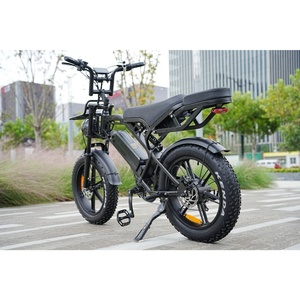
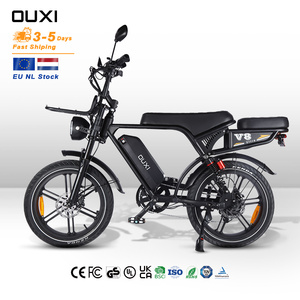
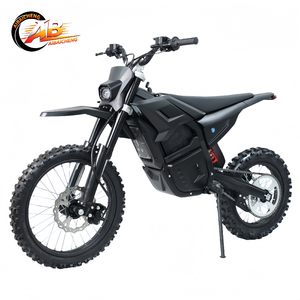
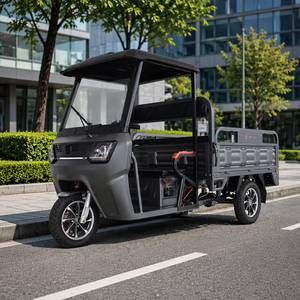
Technical Superiority, Supply Chain Efficiency, and Compliance Framework for Commercial Fleet Operators
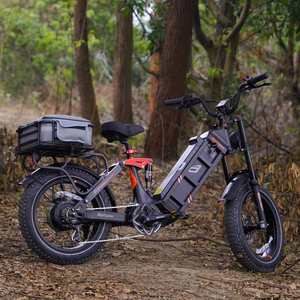
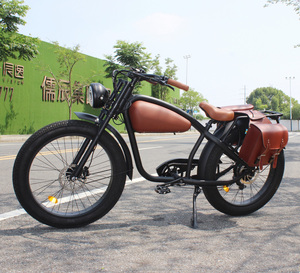
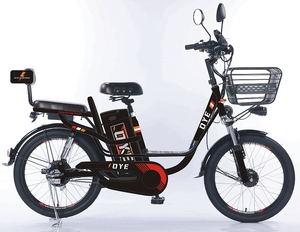
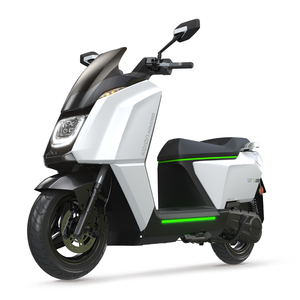
As the global electrification of urban mobility accelerates, high-performance CE Certified Hub Motor Motorcycles are emerging as the structural backbone for last-mile delivery fleets, commuter transport, and regional micro-mobility networks. Unlike conventional internal combustion engine (ICE) motorbikes that require complex mechanical transmissions, oil filtration systems, and high-frequency maintenance schedules, brushless direct-drive hub motors integrate power generation directly within the wheel hub assembly. This structural simplicity maximizes kinetic transfer efficiency, eliminates power loss caused by drive belts or chains, and drastically reduces Total Cost of Ownership (TCO) for enterprise procurement officers.
Rooted in rigorous European design standards—inspired by small-batch Swedish hand-assembly methodologies—our manufacturing complex combines automated robotic stator winding with hand-finished structural integration. Every electric motorcycle framework undergoes 3D coordinate measurement, robotic TIG welding verification, and stress-strain testing to ensure structural integrity across rugged urban and rural topography.
Automated multi-strand copper wire winding optimizes slot fill factors, lowering phase resistance and thermal dissipation under continuous heavy load operations.
Triple-lip synthetic rubber sealing and pressurized helium leak testing ensure total protection against water ingress during high-pressure washdowns or deep puddle navigation.
Fully compliant with EU L3e/A1 vehicle licensing categories, carrying European Whole Vehicle Type-Approval (WVTA) and Certificate of Conformity (CoC) documentation.
In-Wheel Hub Motor Architecture versus Central Mid-Drive Powertrains
Understanding the mechanical and electronic trade-offs between Brushless Direct-Drive Hub Motors and Mid-Drive Powertrains is essential for enterprise buyers optimizing fleet asset allocation. While mid-drive systems excel in extreme high-torque off-road climbing by utilizing gear ratios, in-wheel hub motors dominate urban transport, postal delivery, and daily commuter logistics due to zero maintenance, silent operation, and immediate torque response.
| Evaluation Parameter | CE Direct-Drive Hub Motor System | Traditional Mid-Drive System |
|---|---|---|
| Mechanical Efficiency | 90% - 94% (Direct Wheel Engagement) | 80% - 86% (Friction Loss from Chain/Sprocket) |
| Maintenance Overhead | Near Zero (No chains, belts, or gearboxes) | High (Periodic chain tensioning, lubrication, wear replacement) |
| Acoustic Signature | Ultra-Silent (< 48 dB under full acceleration) | Moderate to High (Gear whine & chain noise > 65 dB) |
| Regenerative Braking | Direct Kinetic Energy Recovery to Battery | Limited Energy Recovery via Transmission Overrun |
| Water/Dust Protection | IP67 Sealed Hub Casing | Exposed Chain & Drive Sprocket Assembly |
| Fleet Total Cost of Ownership | Lowest (35% lower long-term maintenance costs) | Higher due to secondary drive component wear |
Modern CE-certified hub motor electric motorcycles leverage high-frequency Sine-Wave Field-Oriented Control (FOC) vector controllers. By utilizing mathematical algorithms to decompose the stator currents into magnetic flux and torque-producing components, FOC controllers achieve silky-smooth acceleration curves from 0 RPM without the typical "cogging" jerkiness of legacy square-wave block commutation.
Key electronic integrations include:
Navigating Regulatory Shifts, Battery Tech Integration, and Supply Chain Sustainability
The global import-export landscape for commercial two-wheelers is undergoing a structural paradigm shift driven by stringent emissions regulations, urban low-emission zone mandates, and advancing lithium chemistry. Procurement directors must align their multi-year equipment purchases with upcoming global standards to prevent premature fleet obsolescence.
Fleet operators are migrating away from slow external wall bricks toward integrated 1.8 kW to 6.0 kW onboard chargers equipped with EU standard IEC 62196 Type 2 connectors. This allows drivers to plug into public AC charging infrastructure, dropping 20%-80% replenishment cycles down to 45 minutes.
Commercial delivery fleets increasingly demand dual-battery or multi-pack modular configurations. Swappable 72V or 52V high-capacity lithium packs (utilizing premium NCM or LiFePO4 chemistry) allow 24/7 continuous shift operation without stationary downtime.
Next-generation hub motor motorcycles come factory-fitted with 4G/GPS telematics units. Fleet managers track vehicle health, remote battery state of charge (SoC), driver behavior analytics, and execute remote over-the-air (OTA) firmware updates via central management dashboards.
Addressing OEM/ODM Manufacturing, CE Certification, Export Logistics, and Warranty Protocols
Connect directly with our factory engineering team to evaluate regional distribution opportunities, customized fleet configurations, or sample evaluation units.
Inquire Now