
As a premier OEM manufacturer and exporter, our high-speed, long-range lithium electric motorcycles undergo rigorous CE compliance testing and EEC COC homologation. Below are eight top-tier models currently available for B2B wholesale, global dispatch, and ready-stock distribution.
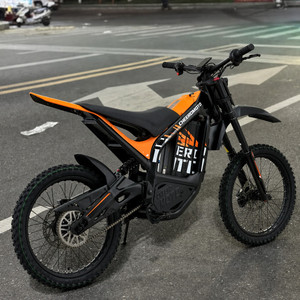
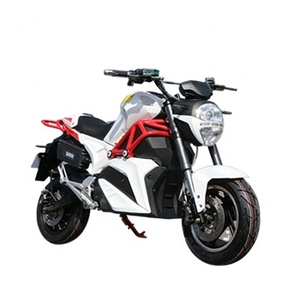
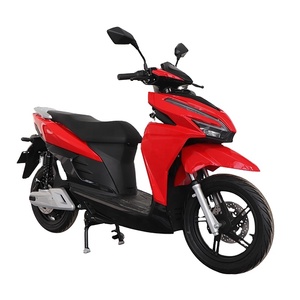
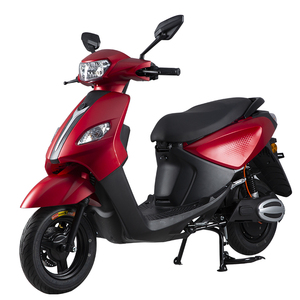
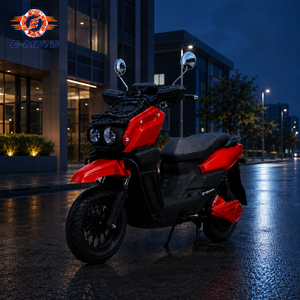
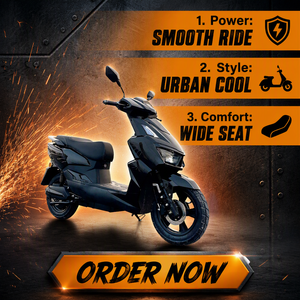
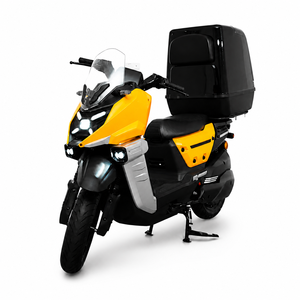
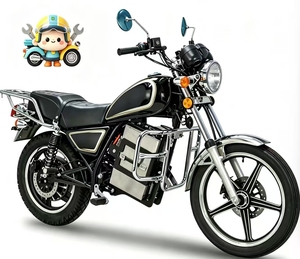
In the rapidly evolving landscape of light electric vehicles (LEVs), obtaining authentic CE Certification is not merely a legal prerequisite for entering the European Economic Area (EEA)—it is the cornerstone of consumer safety, product reliability, and institutional trust. Commercial importers, wholesale distributors, and brand procurement managers must navigate a complex matrix of European directives to ensure seamless customs clearance, zero product recalls, and legal street registration.
A fully compliant CE Certified lithium electric motorcycle must satisfy multiple overlapping safety standards, governed primarily by Directive 2006/42/EC (Machinery Directive), 2014/30/EU (Electromagnetic Compatibility Directive), and Directive 2014/53/EU (Radio Equipment Directive for smart telematics). Furthermore, electric motorcycles categorized under the EU L3e vehicle class (equivalent to 125cc combustion engine motorcycles) must conform to Regulation (EU) No 168/2013, which specifies mandatory Type-Approval (EEC COC - European Community Whole Vehicle Type Approval).
Our manufacturing facilities enforce rigorous testing protocols covering key compliance vectors: EN 15194 for structural frame stress tests, UN 38.3 for high-density lithium battery transport safety, IEC 62133 for battery pack cell integrity, and EN 61000-6-1/3 for electromagnetic immunity against power surges and high-frequency interference. Each unit exported is accompanied by complete CE Declarations of Conformity (DoC), UN 38.3 test reports, and official EEC COC certificates ready for local vehicle licensing agency registration.
| Regulatory / Technical Parameter | L3e Urban Commuter Series | L3e High-Speed Racing / Scrambler | Commercial Fleet / Delivery Series |
|---|---|---|---|
| EU License Category | A1 / L3e (Car license with A1 extension) | A1 / L3e (Full motorcycle rating) | L1e-B / L3e Dual Homologation |
| Motor Output & Architecture | 2000W - 3000W Brushless Hub Motor | 4000W - 6kW Mid-Drive / Direct Hub | 2000W - 3000W Heavy-Torque Hub |
| Lithium Battery Voltage & Capacity | 60V 30Ah / 72V 40Ah Removable Pack | 72V 52Ah / 10.1 kWh Dual Battery | 72V 45Ah Dual Swappable System |
| Maximum Speed | 55 km/h - 75 km/h | 80 km/h - 135 km/h | 45 km/h - 65 km/h (Speed Limited) |
| Certified WLTP Range | 100 km - 139 km | 139 km - 170 km | 120 km - 160 km (Full Load) |
| Charging Protocol | 1.8 kW Standard / Type 2 AC Port | 6 kW Fast Charger (32A Single-Phase) | Dual Dock Fast Charging Station |
The global B2B procurement paradigm for electric motorbikes is undergoing a fundamental structural transition. Moving away from low-cost, uncertified lead-acid scooters, global buyers—ranging from regional powersports distributors in Western Europe to last-mile delivery fleet managers in North America—are aggressively upgrading to modular lithium-ion architectures backed by verified international safety certifications.
Based on macro market analytics and supply chain data, five pivotal trends are defining B2B purchasing behavior over the next decade:
To mitigate volatile maritime freight rates and reduce order-to-delivery lead times from weeks to days, top-tier importers prioritize suppliers offering ready stock in regional hubs (such as US and EU warehouses). Localized inventory allows distributors to scale rapidly without tying up working capital in months of transoceanic inventory.
Modern B2B fleets require real-time visibility. Next-generation electric motorcycles incorporate CAN-BUS vehicle communication networks paired with IoT telematics modules. This enables fleet operators to monitor State of Charge (SoC), thermal battery health, GPS tracking, and perform Remote Over-The-Air (OTA) firmware updates.
The industry is rapidly phasing out legacy 48V/60V systems in favor of high-efficiency 72V and 96V powertrains. Combined with Type 2 automotive charging plug integration, riders can utilize public AC charging infrastructure to achieve 20% to 80% replenishment in under 50 minutes.
Institutional buyers now mandate complete carbon footprint transparency across the supply chain. From ethically sourced lithium/cobalt cells to recyclable aluminum alloy chassis components, suppliers with verified green manufacturing practices gain significant competitive bidding advantages.
The core competitive moat of modern electric motorcycles resides in the engineering synergy between the battery cell chemistry, the Smart Battery Management System (BMS), and the Field-Oriented Control (FOC) vector inverter. As an established exporter, our R&D roadmap focuses on maximizing energy density, thermal stabilization, and mechanical durability.
Advanced lithium cell technologies—specifically High-Density NCM (Nickel Cobalt Manganese) pouch cells and ultra-stable LiFePO4 (Lithium Iron Phosphate) prismatic cells—are engineered to deliver over 1,000 to 1,500 full charge cycles while maintaining greater than 80% initial capacity. Integrated Smart BMS boards feature active cell balancing, multi-point temperature sensors, overcharge/overdischarge protection, and short-circuit auto-cutoff to guarantee operational safety under extreme ambient conditions ranging from -20°C to +55°C.
Drawing inspiration from Scandinavian design philosophies—exemplified by Swedish handcrafted electric motorcycle benchmarks—our premium models balance minimalist aesthetic elegance with rugged structural performance. Every chassis constructed features robot-welded high-tensile steel frames or lightweight forged aluminum alloy swingarms, ensuring high torsional rigidity during high-speed cornering at speeds up to 135 km/h. Attention to detail is evident in every torque-checked bolt, brushed battery casing finish, and ergonomically balanced weight distribution.
Selecting the right manufacturing partner is a critical strategic decision for global distributors. Our enterprise offers a rare combination of industrial manufacturing scale, custom OEM/ODM engineering agility, and comprehensive post-sale service frameworks.
Operating state-of-the-art automated assembly lines in Wuxi—China's premier electric vehicle manufacturing hub—our factory guarantees rapid volume production, strict quality control (ISO 9001:2015), and reliable delivery schedules.
From custom frame geometry, colorways, and branding graphic kits to specialized motor controller tuning, battery capacity configurations, and localized plug types, we tailor products to meet your exact market requirements.
We provide a robust 2-year or 10,000 km warranty covering primary powertrain components (battery pack, FOC controller, motor). We maintain a 100% spare parts stock guarantee for rapid replacement dispatch.
Our dedicated international logistics team handles all export documentation, including CE DoC, EEC COC homologation paperwork, MSDS battery safety datasheets, UN 38.3 transport certification, and customs documentation.
Below are expert technical responses to common questions encountered by global importers, fleet procurement managers, and motorcycle dealers when sourcing CE-certified lithium electric motorbikes.
Partner directly with a certified Chinese manufacturer and exporter offering Swedish-level engineering standards, European EEC homologation, flexible OEM/ODM terms, and ready-stock inventory for rapid global fulfillment.
Inquire Now