
Explore our engineered lineup of urban, highway, off-road, and utility electric vehicles. Fully customizable for international importers, fleet managers, and brand distributors.
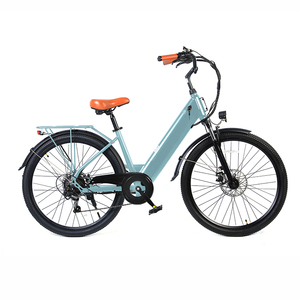
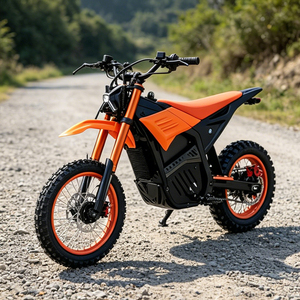
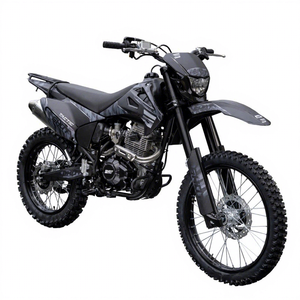
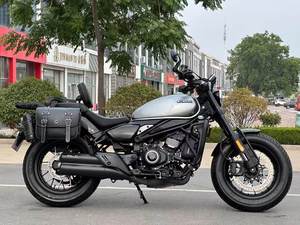
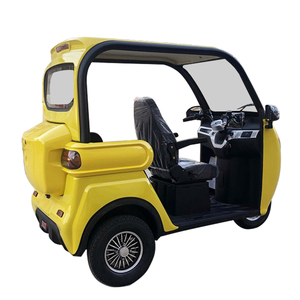
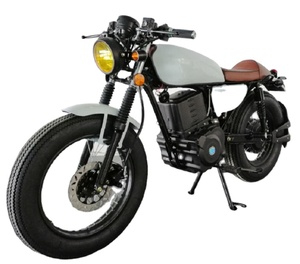
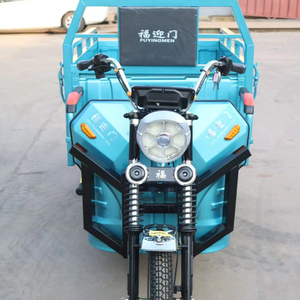
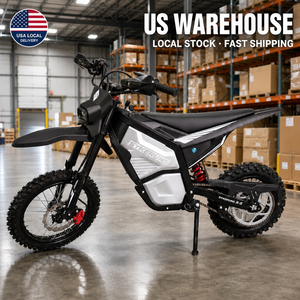
The global light electric vehicle (LEV) market is undergoing a structural paradigm shift. Driven by stringent zero-emission urban zone mandates across the European Union, North America, and Southeast Asia, procurement officers and commercial importers are increasingly pivoting from traditional Internal Combustion Engine (ICE) platforms to high-voltage, CE-certified electric motorcycles. Achieving success in this evolving landscape requires moving beyond low-tier assembly; it demands partnering with manufacturers capable of delivering automotive-grade engineering rigor, robust battery management systems (BMS), and full European Type-Approval (L3e / A1 homologation framework under EU Regulation 168/2013).
This technical whitepaper outlines the core engineering benchmarks, regulatory pathways, and procurement strategies essential for high-volume B2B importers, regional distributors, and OEM brand partners. By prioritizing safety certifications, modular powertrain architectures, and predictable Total Cost of Ownership (TCO), top-tier suppliers provide global buyers with a distinct market advantage in the rapidly scaling electric mobility sector.
Compliance with CE Certification and EU Directive 168/2013 is not merely a legal requirement—it represents a crucial engineering baseline. CE certification ensures compliance with strict Electromagnetic Compatibility (EMC) mandates under EN 61000 standards, preventing radio frequency interference from high-power field-oriented control (FOC) inverters.
Furthermore, structural integrity tests on frame fatigue, dual-channel Anti-Lock Braking Systems (ABS), and electrical safety standards (ISO 6469) are fully validated. Importers partnering with certified manufacturers avoid port seizures, regulatory fines, and liability risks associated with uncertified grey-market imports.
Modern performance-driven electric motorcycles demand robust energy conversion efficiency. Our manufacturing partners utilize Permanent Magnet Synchronous Motors (PMSM) paired with liquid-cooled FOC vector controllers, achieving peak efficiency ratings exceeding 94% efficiency across variable load spectrums.
By switching from basic hub motors to mid-mounted PMSM drives with belt or chain reduction systems, vehicles achieve optimal center-of-gravity placement, reduced unsprung mass, superior heat dissipation, and continuous high-speed cruising without thermal throttling.
As market maturity elevates consumer expectations, procurement strategies among international distributors are shifting from initial purchase cost (CAPEX) to holistic value delivery and lifecycle management. Industry procurement leads should evaluate four strategic pillars shaping future supply chains:
The market is phasing out external heavy brick chargers in favor of standardized, on-board 1.8 kW to 6 kW Type 2 AC chargers. This enables riders to utilize existing public EV charging infrastructure, drastically reducing range anxiety and expanding commercial viability for highway commuting.
B2B buyers increasingly demand CAN-bus connectivity paired with telematics control units (TCU). Over-the-Air (OTA) firmware updates, remote BMS state-of-health (SOH) tracking, and cloud-based fault diagnostics reduce dealer warranty costs by up to 40%.
Standardizing battery cell formats (such as automotive-grade NCM 21700 or prismatic LiFePO4 cells) across diverse chassis variants simplifies spare parts logistics and streamlines custom OEM fleet ordering for distributors.
Compliance with upcoming EU Battery Passport regulations requires end-to-end supply chain transparency. Top OEM suppliers provide certified provenance for lithium, cobalt, and nickel sourcing alongside recyclability protocols.
Understanding the technological trajectory of electric powertrains allows importers to source inventory that remains competitive throughout multi-year product lifecycles. Below is a structural comparison of technical specifications between legacy models and next-generation CE-certified platforms:
| Engineering Domain | Legacy E-Motorcycle Platforms | Next-Gen CE Certified Platforms | Procurement Advantage |
|---|---|---|---|
| Powertrain Architecture | 72V Brushed or Basic BLDC Hub Motors | 72V - 144V Liquid-Cooled PMSM Mid-Drives | Eliminates thermal shutdown during steep climbs and sustained highway speeds. |
| Battery Chemistry & BMS | Lead-Acid or Uncertified 18650 Li-ion Packs | UN38.3 & IEC 62619 Certified Automotive NCM / LFP | Extends functional battery lifespan past 1,000 full cycles with minimal degradation. |
| Charging Infrastructure | Proprietary 5A Off-Board Wall Chargers | Integrated 1.8kW - 6kW Type 2 On-Board Charger | Enables 0-80% fast charging in under 60 minutes at public AC charging hubs. |
| Braking & Safety | Standard Mechanical Disc Brakes | Dual-Channel Bosch ABS + Regenerative Braking | Ensures full compliance with EU A1 / L3e vehicle safety registration directives. |
| Diagnostics & Software | No Data Logging / Offline Controller | CAN-Bus 2.0B / IoT TCU with OTA Capabilities | Allows remote workshop diagnostics, reducing warranty handling costs for dealers. |
Combining European engineering design aesthetics with advanced, cost-efficient manufacturing ecosystem capabilities, our facilities deliver uncompromised build quality to global distributors. Inspired by small-batch handcrafted manufacturing protocols (such as Swedish automotive assembly precision), our production lines adhere to stringent quality control standards at every stage of assembly.
Every critical chassis fastener, brake caliper bolt, and triple-clamp mounting point is torqued using calibrated digital torque tools with automated electronic data logging, ensuring structural integrity across 100% of production output.
Unlike rigid high-volume assembly lines, our flexible manufacturing lines accommodate regional customizations, including tailored gear ratios, custom battery capacities (8.3 kWh to 10.1 kWh), bespoke paint finishes, and custom telematics branding.
All range parameters are tested according to standardized Worldwide Harmonized Light Vehicles Test Cycles (WLTP). Importers receive verified range metrics (~139 km standard / ~170 km long range) rather than exaggerated low-speed test claims.
Backed by a standard 2-Year / 10,000 km full vehicle and battery pack warranty. We maintain inventory buffer stocks for immediate air-freight dispatch of replacement controller modules, BMS boards, and body panels.
Essential guidance addressing regulatory approval, shipping compliance, custom branding, and warranty service infrastructure.
Every vehicle batch shipped under our CE / EEC certification includes a Certificate of Conformity (CoC) matching EU Regulation 168/2013 for L3e-A1 / L3e-A2 registration, test reports for EMC compliance (EN 61000), battery shipping safety reports (UN38.3), and MSDS documentation required for customs clearance in all EU member states, North America, and Australia.
Our built-in smart chargers are wide-range AC compatible (110V - 240V single-phase, 50/60Hz). When plugged into standard household sockets (1.8 kW output), full charge is achieved in ~3h 45m. When connected to public AC Type 2 stations via single-phase 32A connections (6 kW fast charger option), charging times drop to ~60 minutes, automatically adjusting power draw down to 3.3 kW on 11 kW multi-phase posts.
We provide comprehensive white-label OEM services for orders exceeding minimum order quantity (MOQ) thresholds. Branding options cover custom laser-etched frame badges, tailored instrument cluster UI graphics, branded mobile app software integration, custom seat stitching, and bespoke colorways for body panel molds.
Utilizing high-nickel NCM 21700 cylindrical cells managed by our proprietary smart BMS with active thermal oversight, battery modules retain over 80% State of Health (SOH) after 1,000 complete charge-discharge cycles. Under typical operating profiles, this yields an estimated service life exceeding 100,000 km prior to pack re-cell or repurposing.
All high-voltage lithium battery systems are fully certified under UN38.3 packaging standards. Vehicles shipped with installed batteries utilize hazardous goods compliant sea freight containers (IMDG Code) handled by authorized logistics partners specializing in EV transport. We provide complete dangerous goods declarations (DGD) to ensure seamless port processing.
The integrated TCU logs diagnostic trouble codes (DTC) from the motor controller, BMS, and dashboard over the CAN-bus network. In the event of a technical issue, dealer technicians connect to our cloud service tool to perform remote diagnostic fault tracing, execute ECU software recalibrations, and pinpoint component failures prior to replacing hardware parts.
Connect with our engineering and partner sales teams to discuss territory distribution rights, demo fleet evaluation programs, custom OEM specifications, and bulk container freight rates.