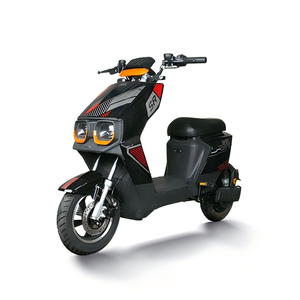
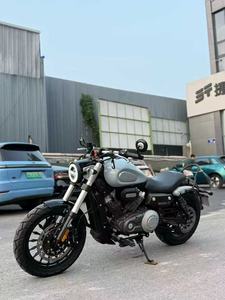
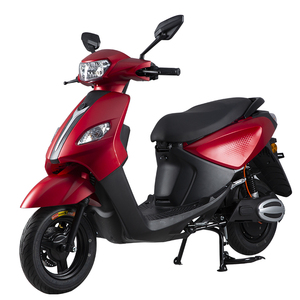
Engineered by leading Chinese original equipment manufacturers (OEMs), these flagship models feature high-capacity lithium storage, advanced CAN-bus vector controllers, and certified structural frames designed for global export.
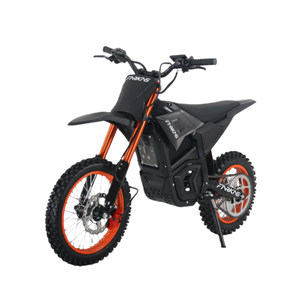
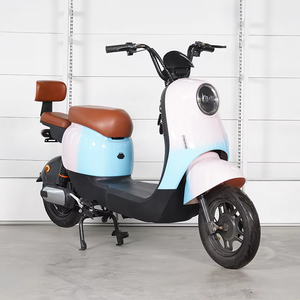
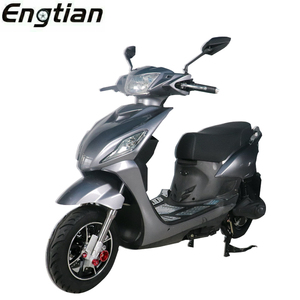
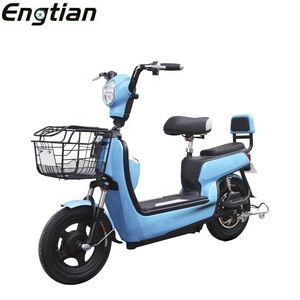
The global two-wheeler sector is undergoing a profound paradigm shift driven by urban decarbonization mandates, advancements in electrochemical energy storage, and changing consumer purchasing behaviors. As international distributors and fleet operators evaluate long-range motorbike sourcing, China’s industrial cluster has evolved from low-cost mass production to high-precision engineering, world-class automotive-grade battery integration, and smart telematics.
Understanding how top-tier Chinese motorbike factories manage thermal dissipation, high-voltage battery architecture, frame stress dynamics, and international homologation (such as EU A1/L3e and US DOT/EPA standardizations) provides procurement officers with an essential competitive advantage. This whitepaper systematically breaks down manufacturing parameters, sourcing strategies, future tech trajectories, and technical procurement FAQs.
Modern top-tier Chinese manufacturing operations combine massive scale with meticulous Scandinavian-level engineering standards. Factories specializing in high-performance electric and internal combustion engine (ICE) motorbikes now utilize small-batch assembly protocols alongside automated robot welding to ensure exact structural alignment and structural durability.
Utilizing 8.3 kWh to 10.1 kWh nickel-manganese-cobalt (NMC) and lithium iron phosphate (LFP) chemistries with smart BMS capable of over 1,000 complete charge cycles with less than 15% degradation.
Integrated Type 2 EU-standard AC charging systems. Standard 1.8 kW household socket capability paired with optional 6 kW single-phase fast chargers capable of 20% to 80% replenishment in under 50 minutes.
100% bolt-torque digital tracking, dynamic dyno chassis verification, laser-guided wheel alignment, and waterproof IP67 immersion tests for all electrical wiring harnesses.
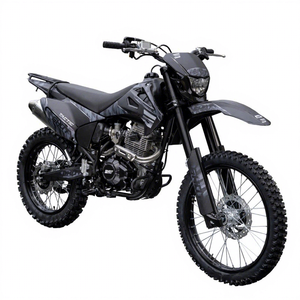
Whether producing retro classic cruisers like the Benda Chinchilla 300 V-Twin or advanced off-road trail bikes with lightweight hydroformed aluminum frames, premier factories maintain stringent quality control (QC) tracking systems. By integrating CAN-bus remote diagnostic modules, manufacturers allow importers to conduct remote firmware updates (OTA) and diagnose drivetrain faults without requiring heavy workshop infrastructure.
Navigating upcoming technological shifts is vital for fleet owners and importers seeking to future-proof their supply chains. Over the next five years, four critical technological vectors will define the long-range motorbike landscape:
Current long-range electric motorbikes rely heavily on high-density liquid lithium-ion cells yielding 139 km to 170 km WLTP ranges. Factories are currently transitioning pilot lines toward solid-state and semi-solid pouch cell technologies. This innovation increases volumetric energy density by up to 40%, allowing 250+ km real-world ranges without expanding the physical size of the battery casing.
While urban commuters operate effectively on 48V to 72V low-voltage systems, high-speed highway-capable motorcycles (capable of speeds exceeding 135 km/h) are moving toward high-voltage architectures. This switch dramatically reduces copper cable weight, mitigates thermal buildup under sustained load, and permits direct compatibility with public automobile DC fast-charging networks.
Modern procurement demands connectivity. Premier Chinese motorcycle factories are embedding cellular IoT modules, GPS trackers, and CAN-bus diagnostic capabilities as factory standards. Commercial fleet managers can monitor real-time battery state-of-health (SOH), cell voltage variance, vehicle location, and automated crash alerts via cloud dashboard APIs.
Weight reduction is the most effective method for extending vehicle range. Factory production line upgrades emphasize die-cast aluminum swingarms, forged alloy triple clamps, and tubular chromoly steel hybrid frames. Replacing traditional heavy carbon-steel tubing reduces overall curb weight by 20–30%, directly translating into snappier acceleration and extended battery range.
The global distribution model for long-range motorbikes is shifting from traditional finished-goods importing toward strategic, customized assembly models tailored to regional market tariffs and compliance mandates.
To navigate high import tariffs on finished vehicles in regions like South America, Southeast Asia, and parts of Europe, major importers are contracting with Chinese factories for CKD and SKD kits. Factories provide modularized sub-assemblies—such as pre-wired battery cradles, pre-bled disc brake lines, and factory-calibrated engine assemblies—allowing local distributors to assemble units domestically while benefiting from significantly lower tariff rates.
Regulatory compliance remains the biggest bottleneck for international motor vehicle distribution. Top-tier Chinese OEM facilities maintain dedicated homologation compliance divisions. For European markets, vehicles are certified under A1/L3e categories (enabling car license holders with national extensions to ride), complete with functional CBS/ABS braking systems, E-mark certified LED light arrays, and ISO-compliant Type 2 charging inlets.
Essential insights for business buyers, fleet importers, and regional distributors evaluating long-range motorbike factories in China.
Leading Chinese export factories build vehicles engineered to meet EU L3e/A1 standards as well as US DOT/EPA regulations. This allows end users with standard European A1 licenses (or B car licenses with regional extensions) to operate vehicles up to 11 kW continuous power output legally.
Export models utilize standardized Type 2 charge ports. Standard 1.8 kW onboard chargers plug into standard 110V-240V household outlets (charging in 3.5 to 4 hours). Optional 6 kW fast-charging modules allow AC station charging from 20% to 80% in approximately 50 minutes.
On official WLTP cycles, 8.3 kWh battery packs yield roughly 139 km, while 10.1 kWh packs achieve up to 170 km. Real-world range varies by riding mix: urban stop-and-go consumes ~45 Wh/km, mixed country roads ~65 Wh/km, and continuous highway speeds (100+ km/h) consume ~95 Wh/km.
Standard MOQs for OEM/ODM custom branding typically begin at 20 units for fully assembled (CBU) sample shipments, and 50–100 units for CKD/SKD containerized shipments. Custom colorways, decal branding, and specialized firmware parameters can be tailored at these volume thresholds.
Tier-1 OEM factories back their products with a 2-year or 10,000 km structural and electrical warranty. Battery chemistry is rated for over 1,000 full discharge cycles while retaining over 80% initial capacity. Modular pack designs ensure localized cell servicing without replacing the entire battery array.
Factories provide 3%–5% wearable spare parts (brake pads, tires, levers, relays) bundled with bulk container orders.Drivetrain software issues are supported remotely through cloud-connected CAN-bus diagnostic software, allowing factory engineers to analyze telemetry logs directly.
Access detailed factory specs, OEM pricing structures, CKD assembly guides, and complete compliance documentation for your target market.