
Explore China’s leading export-grade electric two-wheelers featuring integrated Type 2 AC charging interfaces, high-capacity lithium battery packs, and robust brushless drive systems.
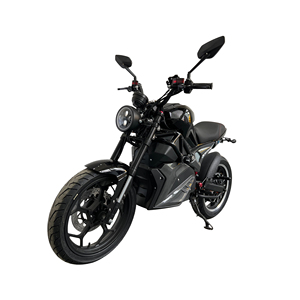
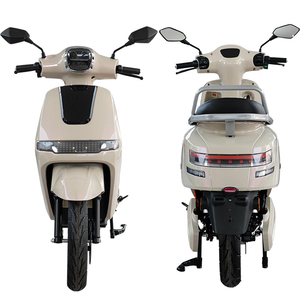
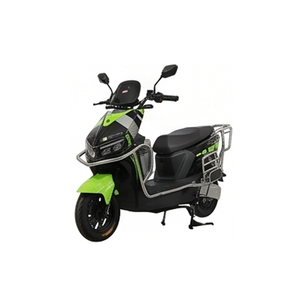
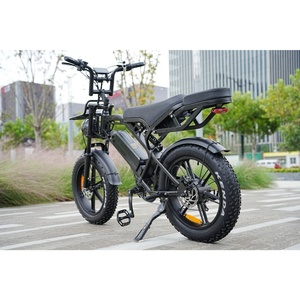
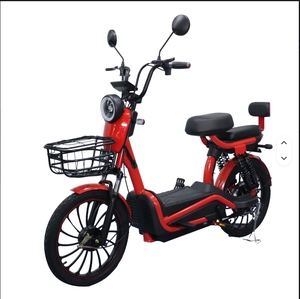
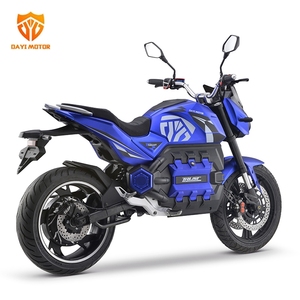
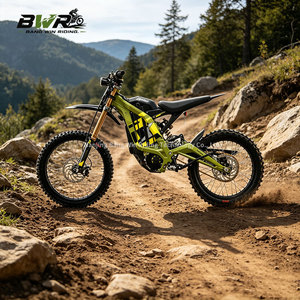
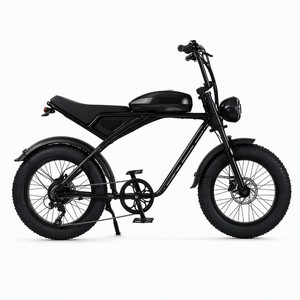
The global light electric vehicle (LEV) market is undergoing an unprecedented structural transition. Historically, electric motorcycles engineered in Asia relied on wall-socket trickle chargers (Schuko or proprietary DC plugs) operating at 1.2 kW to 1.8 kW. However, European Union mandates, stringent L3e/A1 homologation rules, and the rapid expansion of public charging infrastructure have elevated the Type 2 (IEC 62196-2) AC interface from a premium luxury feature to an absolute prerequisite for wholesale buyers and commercial fleet operators.
Chinese OEM suppliers and exporters are at the forefront of this industrial revolution. By combining high-density lithium-ion battery chemistries (NMC/LFP) with high-efficiency onboard AC-to-DC converters and standard Type 2 inlets, Chinese manufacturers now deliver electric motorcycles capable of utilizing public EV charging networks across Europe, North America, and Oceania without requiring bulky external wall adapters.
B2B Market Insight: European importers sourcing Type 2 compliant electric motorcycles gain an immediate 40% reduction in charge-anxiety friction for end-users. Access to over 600,000 public AC chargers across the EU turns urban electric commuters into viable highway-capable touring vehicles.
Native integration of the IEC 62196-2 Type 2 inlet allows two-wheelers to lock into standard 11 kW and 22 kW public AC pillars, utilizing single-phase 32A charging protocols seamlessly.
Engineered to match European A1 and L3e light motorcycle speed and power ceilings (11 kW continuous output, up to 135 km/h), allowing car license holders in key EU countries to operate with minimal friction.
Leading Chinese exporters offer completely knocked-down (CKD) and semi-knocked-down (SKD) kits, enabling overseas distributors to minimize import tariffs and localized assembly overheads.
Dissecting the high-voltage drivetrain, thermal management, and charging electronics powering next-generation Type 2 electric motorbikes.
Standard electric scooters operate on lower voltage platforms (48V or 60V) restricted by thermal limitations and slow charging inputs. Premium Chinese wholesale Type 2 motorbikes utilize high-voltage platforms spanning 72V to 96V nominal architecture. This elevated voltage threshold lowers current draw for the same power rating, dramatically mitigating resistive heat loss during high-speed highway cruising and fast-charging cycles.
Utilizing high-capacity 8.3 kWh to 10.1 kWh lithium battery modules. Integrated smart BMS provides active cell balancing, over-charge/discharge preservation, and automated thermal throttling at peak loads.
Integrated water-cooled or forced-air OBC accepts AC input directly from Type 2 charging stations. Achieves 20% to 80% state-of-charge (SoC) replenishment in under 50 minutes.
High-torque brushless PMSM (Permanent Magnet Synchronous Motor) designs delivering peak outputs from 6,000W to 11,000W with liquid cooling, delivering up to 135 km/h top speeds.
| Specification Parameter | Standard Household Plug (Schuko) | Type 2 (IEC 62196-2) Standard | Type 2 Fast AC (Option) |
|---|---|---|---|
| Charging Protocol | Single-Phase AC (Mode 2) | Single-Phase AC (Mode 3) | Single-Phase 32A AC (Mode 3) |
| Power Input (kW) | 1.4 kW – 1.8 kW | 3.3 kW – 3.6 kW | 6.0 kW – 6.6 kW |
| 20% to 80% Charge Time | ~ 3.5 Hours to 4.5 Hours | ~ 1.5 Hours to 2.0 Hours | ~ 50 Minutes to 60 Minutes |
| Station Compatibility | Home Wall Sockets Only | Public AC Pillars & Home Wallboxes | Commercial 22 kW Public AC Hubs |
| Safety Mechanisms | Basic In-Line Control Box (ICCB) | Hardware Control Pilot (CP) & Proximity Pilot (PP) | Automated CP Interlock & BMS Thermal Throttling |
The global success of premium electric two-wheeler brands stems from a hybrid manufacturing philosophy: combining Scandinavian minimalist aesthetics, rigorous Swedish structural engineering, and precision hand-craftsmanship with the robust, high-volume production ecosystem of Eastern China (Jiangsu, Zhejiang, and Guangdong EV clusters).
Chinese OEM/ODM partners have invested heavily in automated robotics, SMT circuit board assembly, ultrasonic wire bonding for battery packs, and dynamic dynamometer testing facilities. This scale allows international distributors to receive custom-branded Type 2 electric motorcycles built to European quality standards at competitive wholesale price points.
Every vehicle undergoes multi-stage quality assurance checks, including frame torque verification, laser alignment, and full waterproof immersion testing (IP67 rating on wiring looms and ECU blocks).
From custom leather upholstery, retro cafe racer styling, and aluminum alloy swingarms to fully integrated smart instrument clusters featuring Apple CarPlay and Android Auto navigation support.
Turnkey export documentation including EEC CoC (Certificate of Conformity), DOT certification, UN38.3 lithium battery transport compliance, and CE/UL safety validation.
Key technical advancements and regulatory dynamics shaping wholesale supply chains for electric motorcycles.
Next-gen export models come integrated with IoT 4G telematics, allowing fleet owners and distributors to manage remote ECU firmware updates (OTA), diagnostic tracking, and anti-theft geofencing.
Energy density upgrades approaching 300 Wh/kg will allow 15 kWh battery capacities within compact motorcycle frames, extending WLTP range targets past 220 km per single charge.
Transition from combined braking systems (CBS) to mandatory dual-channel Bosch or local high-precision ABS, paired with switchable traction control systems (TCS) for enhanced wet-weather safety.
Wholesale partners are optimizing logistics via modular assembly kits, reducing container volume requirements by 35% and streamlining local aftermarket spare-part distribution networks.
Addressing critical technical, regulatory, and procurement inquiries regarding Type 2 electric motorbike sourcing from China.
Most high-performance Type 2 electric motorcycles are homologated under the EU L3e-A1 or L3e-A2 categories. L3e-A1 corresponds to traditional 125cc combustion motorcycles (continuous power rated up to 11 kW, power-to-weight ratio up to 0.1 kW/kg). In many European countries (e.g., France, Spain, Germany under B196), holders of a standard car license (Category B) with brief training can legally ride these models, expanding the addressable customer base for importers.
The Type 2 connector features integrated Control Pilot (CP) and Proximity Pilot (PP) signal pins. When plugged into a public AC EV charger or wallbox, the vehicle's onboard controller performs a hardware handshake with the charging station. Current flow only initiates after verifying ground continuity, cable current limit capacity (via PP resistor network), and vehicle state readiness (State B to State C transition via CP PWM signal modulation). This eliminates live sparking and guarantees strict adherence to international electrical safety protocols.
Under standardized WLTP testing cycles, an 8.3 kWh pack yields approximately 135 km to 140 km of mixed range, while a 10.1 kWh extended battery delivers up to 170 km. In practical city riding (average energy draw of 45 Wh/km), actual range can exceed 190 km. At sustained highway speeds of 100 km/h (consumption around 95 Wh/km), realistic range spans 85 km (8.3 kWh) to 105 km (10.1 kWh).
Yes. Chinese OEM manufacturers specialize in flexible ODM/OEM programs. Importers can specify proprietary frame powder coatings, customized laser-etched aluminum battery casings, bespoke leather saddle stitching, branded instrument display startup screens, and localized telemetry SIM configurations for bulk orders starting from 10 to 50 units depending on the model.
Sourcing via SKD (Semi-Knocked-Down) or CKD (Completely Knocked-Down) reduces shipping volume by 30% to 50%, enabling up to 60-80 units to fit in a 40HQ container versus 24-30 CBU units. Furthermore, many countries assess lower import tariff rates on disassembled vehicle components compared to fully assembled motorcycles, providing substantial total cost of ownership (TCO) advantages for regional distributors with assembly capabilities.
Leading exporters provide comprehensive 2-year / 10,000 km warranties covering battery packs, motor controllers, and primary structural frames. Because electric powertrains eliminate oil changes, spark plugs, and transmission clutch wear, routine maintenance is limited to brake pads, tires, and brake fluid. Drivetrain diagnostics are conducted remotely via CAN-bus reading tools or onboard IoT modules, allowing engineering teams in China to analyze telemetry logs and issue software patches directly.
When drawing 6.0 kW to 6.6 kW via a Type 2 fast charger, the onboard BMS actively monitors cell temperatures across multi-point NTC thermistor sensors. If battery core temperatures approach 45°C, the BMS dynamically commands the onboard charger to step down current input or engages active cooling fans. Battery cells are engineered for over 1,000 to 1,500 full charge cycles while maintaining greater than 80% state of health (SoH).
Whether you are expanding an established power-sports distribution network, building a commercial urban delivery fleet, or launching a premium boutique e-mobility dealership, our team offers unmatched manufacturing capacity, rigorous technical quality control, and seamless international export support.
Tailored production lines accommodating sample trial orders as well as large-scale monthly container shipments with strict timeline execution.
Complete regulatory documentation, including EEC CoC, ISO9001 factory audits, battery safety reports, and homologation technical drawing packages.
Direct communication with powertrain engineers, firmware technicians, and logistics specialists to guarantee smooth market entry and post-sales support.
Connect directly with our engineering and export team to request wholesale pricing catalogs, customized OEM specifications, and sample vehicle evaluation packages.
Contact Us