
Explore our engineering-validated OEM electric sportbikes, cafe racers, enduro dirt bikes, and smart urban cruisers available for customized global distribution.
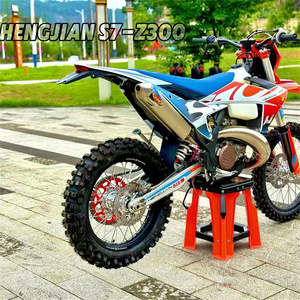
Engineered for competitive off-road performance featuring high-tensile alloy chassis, heavy-duty suspension, and optimized power delivery.
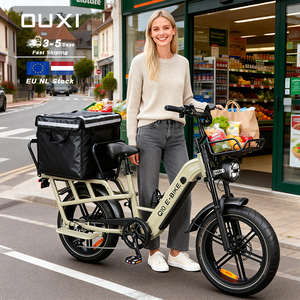
Heavy-duty family utility e-bike with long-tail frame, dual hydraulic disc braking system, and multi-passenger load capacity.
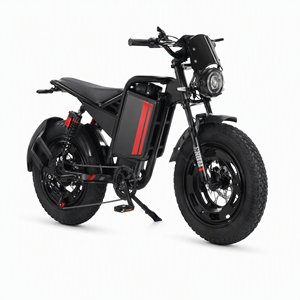
Ergonomic urban daily commuter featuring full suspension dynamics, smart LCD telematics, and relaxed frame geometry.
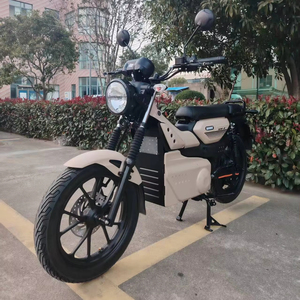
High-power brushless motor platform achieving speeds over 80km/h with extended lithium-ion battery range and aggressive fairing.
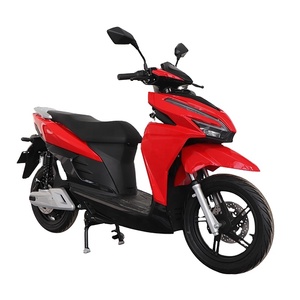
Long-range urban sport bike featuring dual removable battery bays, intelligent BMS, and reinforced 14-inch wheel hub setup.
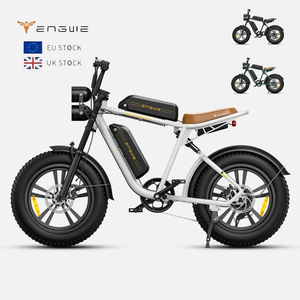
Scrambler-inspired aesthetic with 48V 26Ah dual power packs, full suspension, all-terrain fat tires, and EU warehouse stock.
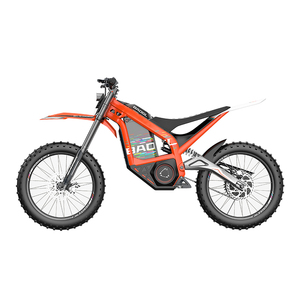
Classic aesthetic combined with modern electric drive unit, brushed metal battery trim, and premium street handling performance.
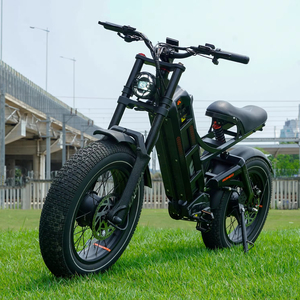
Maximum range city commuter featuring heavy-duty steel tubular frame, high-capacity 60Ah battery pack, and fast charging capability.
The global two-wheeled mobility industry is experiencing a seismic technological shift. As stringent emission compliance regimes tighten across North America, Europe, and Asia-Pacific, commercial importers, OEM brand owners, and fleet operators face an urgent imperative to transition toward high-voltage, zero-emission powertrains. Electric sport motorcycles represent the convergence of high-density battery engineering, advanced power electronics, and bespoke chassis craftsmanship. This whitepaper serves as an authoritative technical and strategic guide for international buyers seeking reliable Custom OEM Electric Sport Motorcycle Manufacturer & Exporters.
Core Procurement Insights: Industrial procurement is moving beyond basic assembly. Contemporary B2B importers require modular platform architectures, European A1/L3e certificate compatibility, direct CAN-bus telemetry, and scalable production workflows that maintain stringent quality controls across both micro-batch custom runs and full-scale container exports.
The electrification of two-wheelers is no longer restricted to low-speed urban mopeds. The premium market segment—spanning high-speed sportbikes, cafe racers, off-road enduros, and high-capacity dual-purpose scramblers—is expanding rapidly. According to global vehicle registry data, the market demand for L3e category (motorcycles equivalent to 125cc and above) electric powertrains is projected to grow at a Compound Annual Growth Rate (CAGR) exceeding 22.4% over the next decade.
Several key demand drivers are reshaping the procurement strategies of global distributors:
Integration of liquid-cooled and air-cooled PMSM mid-hub and central drive motors delivering up to 11kW peak output with over 93% energy conversion efficiency.
Smart Battery Management Systems with real-time cell balancing, multi-stage thermal protection, and over 1,000 deep cycle guarantees across NMC & LiFePO4 chemistries.
Embedded CAN-bus communication protocols supporting Bluetooth, 4G IoT connectivity, GPS tracking, remote diagnostics, and OTA software updates.
As a leading custom OEM electric sport motorcycle manufacturer, our production matrix relies on a modular platform engineering methodology. Rather than creating single-purpose tooling, our chassis, power electronics, and battery enclosures are engineered to allow scalable customization. This drastically reduces development lead times and NRE (Non-Recurring Engineering) expenses for our global commercial partners.
The structural backbone of any high-speed electric sportbike must withstand intense torsional stress while compensating for the concentrated weight of high-capacity battery packs. We utilize aerospace-grade T6 heat-treated 6061 aluminum alloy frames alongside high-tensile chrome-moly tubular steel spaceframes. Every frame design undergoes rigorous Finite Element Analysis (FEA) testing to optimize weight distribution, achieving an ideal 50:50 front-to-rear axle bias for maximum high-speed cornering stability.
The energy storage module represents both the primary structural weight and the single most critical safety component of an electric vehicle. Our custom OEM enclosures utilize die-cast or CNC-milled aluminum casings featuring brushed, polished, or powder-coated surface treatments. Integrated cooling fins facilitate passive heat dissipation during high-discharge sport riding modes. For extreme climate conditions, active liquid cooling circuits are integrated within the pack array to maintain cell temperature within the optimal operating window of 20°C to 35°C.
| OEM Specification Parameter | Urban Commuter Platform | Sport Scrambler Platform | High-Speed OEM SuperSport |
|---|---|---|---|
| Nominal Motor Power | 2.0 kW – 3.5 kW Continuous | 5.0 kW – 6.0 kW Continuous | 8.0 kW – 11.0 kW Peak Output |
| Peak System Torque | 110 Nm at Rear Wheel | 180 Nm at Rear Wheel | 260+ Nm at Rear Wheel |
| Battery Pack Options | 48V 26Ah / 52V 60Ah NMC | 72V 80Ah / 8.3 kWh Pack | 72V 100Ah / 10.1 kWh Dual Pack |
| Top Velocity (Homologated) | 60 km/h – 85 km/h | 110 km/h – 135 km/h | 135+ km/h (L3e Category) |
| Charging Hardware | 1.8 kW Onboard Standard | 1.8 kW / 3.3 kW Type 2 Port | 6.0 kW Single-Phase Fast Charge |
| Braking & Safety Systems | Hydraulic Disc / CBS Option | Dual-Channel ABS + Regenerative | Brembo/Radical ABS + Traction Ctrl |
Navigating international vehicle import regulations requires strict adherence to regional homologation protocols. Importers must align their product roadmaps with target market requirements to prevent costly port detentions or commercial distribution delays.
For European distributors, certifying electric motorcycles under the L3e-A1 subcategory offers a massive strategic advantage. Vehicles rated with a continuous power output under 11 kW can be operated by riders holding an A1 license or, in multiple EU member states (such as Germany, France, and Spain), by standard B car license holders who complete brief national training extensions. This significantly expands the addressable consumer market compared to heavy ICE motorcycling categories.
A major trend in global electric motorcycle procurement is the shift away from slow external chargers toward integrated Type 2 charging standard ports. Incorporating an internal 1.8 kW onboard charger enables users to plug directly into household wall outlets. Furthermore, upgrading to an optional 6 kW single-phase (32A) fast charger allows 20% to 80% charge cycles to be completed in under 50 minutes at public AC charging stations. OEM buyers should ensure their supplier offers modular charge port configurations suited to regional grid standards (110V US vs. 230V EU).
International tariffs and shipping container costs have forced importers to re-evaluate logistics structures. As a full-service OEM exporter, we offer three distinct shipping configurations:
Building high-performance electric motorcycles requires a manufacturing ethos centered on engineering integrity, repeatability, and micro-precision craftsmanship. Drawing from rigorous Swedish and European small-batch hand-assembly traditions, every vehicle produced in our facility undergoes multi-stage quality gates.
Robotic frame welding cells ensure precise seam consistency, eliminating structural heat zones and guaranteeing high frame durability.
Every completed unit is dyno-tested to calibrate motor controller throttle mapping, regenerative braking curves, and peak power output.
Battery enclosures and electrical harness connectors undergo pressurized moisture seal testing to ensure all-weather reliability.
From torque-checking every high-tensile bolt with calibrated digital wrenches to conducting remote CAN-bus diagnostics on outgoing batches, our manufacturing workflows guarantee that importers receive consumer-ready products that uphold their brand's reputation for quality.
End-to-end manufacturing solutions engineered to scale your electric motorcycle brand globally.
In-house R&D staff capable of handling customized frame geometry, bespoke fairing molds, proprietary dashboard UI design, and localized lighting packages.
We provide comprehensive EEC, COC, DOT, CE, and ISO9001 documentation packages to streamline vehicle registration and compliance in target countries.
Flexible manufacturing schedules accommodating initial market-testing orders (low MOQ) up to full high-volume monthly container allocations.
Essential answers regarding MOQ, custom branding, logistics, battery warranties, and certification support.
For standard logo customization and colorway selections, our starting MOQ is as low as 5 to 10 units per model. For complete bespoke structural modifications (such as custom frame geometry or proprietary bodywork molds), MOQs are determined based on tooling requirements and component manufacturing runs.
All lithium-ion and LiFePO4 battery packs are certified under UN38.3, MSDS, and Hazardous Goods (DG) Class 9 shipping standards. Batteries are shipped safely inside reinforced steel vehicle bays or packed in UN-certified wooden export crates with thermal isolation safeguards.
We provide official Certificate of Conformity (COC) documentation for European L3e/A1 vehicle registration, along with 17-digit VIN allocation. For North American buyers, vehicles can be built to comply with DOT, EPA, and SAE vehicle lighting standards.
We provide a comprehensive 2-year or 10,000 km factory warranty covering the frame, electric motor, controller, and battery pack. Replacement spare parts (such as brake pads, wiring harnesses, relays, and LCD displays) are routinely supplied with container shipments for local distributor servicing stock.
Yes. Our ECU and BMS systems utilize standard CAN-bus communication protocols. Our engineering team can collaborate with your software developers to integrate custom 4G telematics boxes, GPS tracking modules, or smartphone companion applications.
Standard OEM orders typically require 30 to 45 days for production upon deposit confirmation and sample sign-off. CKD/SKD kit shipments can often be fulfilled within 25 to 30 days depending on component availability.
Connect directly with our engineering team to request factory pricing, technical specifications, CAD documentation, or custom OEM quotation packages.