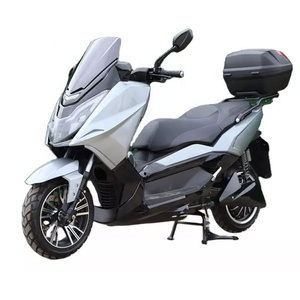
Explore our curated selection of high-power, high-efficiency electric roadsters, vintage cafe racers, dirt bikes, and city commuters engineered for global importers, brand distributors, and commercial fleet owners.
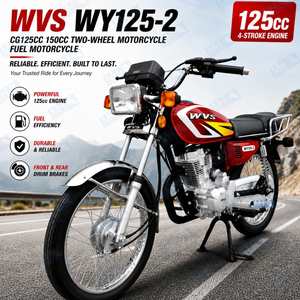
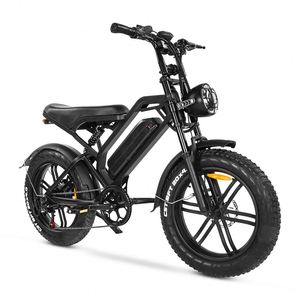
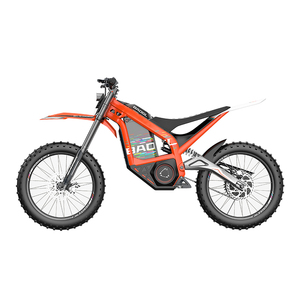
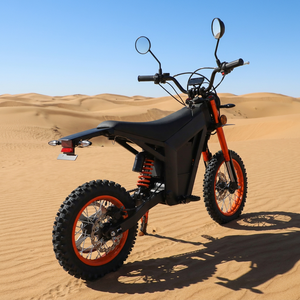
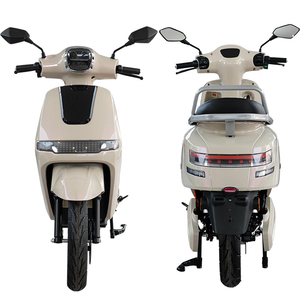
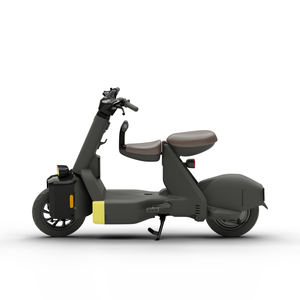
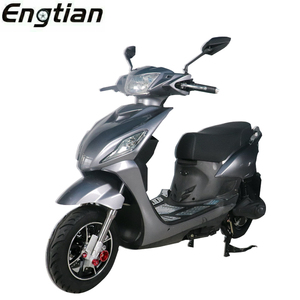
The global powersports industry is experiencing an unprecedented structural shift. Driven by stringent zero-emission mandates across European low-emission zones (LEZs), rising fuel costs, and consumer preference for low-maintenance personal mobility, the market demand for premium electric motorcycles (L3e/A1 category) is compounding at over 21.4% CAGR through 2030. For OEM buyers, regional importers, and dealership networks, selecting a manufacturing partner goes far beyond basic motor wattage.
Modern procurement decisions require rigorous technical evaluation of Battery Energy Density (kWh), Thermal Management Systems (BMS), On-Board Charging Infrastructure (Type 2 compatibility), Homologation Compliance (EEC/COC & DOT), and supply chain flexibility such as Complete Knock-Down (CKD) versus Semi-Knock-Down (SKD) logistics. This whitepaper establishes an authoritative evaluation of the world's leading premium electric motorcycle manufacturers, outlining state-of-the-art technological architectures, engineering standards, and global sourcing strategies.
Below is an in-depth analysis of the premier electric motorcycle factories globally, benchmarked across manufacturing capacity, battery technology integration, frame build quality, and OEM/ODM market adaptability.
Headquartered in Kungsbacka (Anneberg), Sweden, RGNT Motorcycles stands as the gold standard in premium, small-batch electric motorcycle manufacturing. Focusing exclusively on the A1 / L3e licence classification, RGNT bridges timeless vintage design with cutting-edge EV technology. Every motorcycle is assembled by hand by skilled craftsmen on the Swedish west coast, featuring precision-machined brushed battery casings, bespoke chassis geometry, and premium Swedish tactile touchpoints.
Technical Highlight: Built on a modular high-capacity lithium powertrain (8.3 kWh Standard to 10.1 kWh Long Range), RGNT bikes deliver up to 170 km of WLTP certified range. Utilizing a native Type 2 AC charging port, RGNT offers an optional 6 kW single-phase (32A) fast charger capable of delivering 20% to 80% state-of-charge in just 50 minutes. Drivetrain telemetry is monitored via cloud-connected remote diagnostics, minimizing dealer workshop overhead.
Based in California, Zero Motorcycles is widely acknowledged as one of the early commercial pioneers in high-performance electric motorcycles. Zero develops proprietary Z-Force® passive-air-cooled permanent magnet motors and high-density Z-Force® lithium-ion power packs.
Technical Highlight: Zero's Cypher III+ operating system provides custom mapping and OTA (Over-The-Air) performance upgrades. With peak power outputs exceeding 82 kW on flagship models, Zero targets premium sport-touring and dual-sport market segments globally.
Situated in Italy's famous Motor Valley, Energica specializes in ultra-high-performance electric superbikes. Derived from years of serving as the sole manufacturer for the MotoE World Cup, Energica builds machines with massive torque and liquid-cooled battery technology.
Technical Highlight: Energica models feature native DC Fast Charging (CCS Combo 2), enabling 0-80% recharges in under 20 minutes. Their heavy-duty powertrain delivers up to 215 Nm of instant torque, catering to high-end performance enthusiasts.
Vmoto is a global leader in high-volume electric two-wheeler production, with massive manufacturing facilities in Nanjing, China, and design hubs in Europe. They specialize in accessible urban commuters, mopeds, and lightweight street motorcycles.
Technical Highlight: Vmoto excels in modular swappable battery systems (60V/72V lithium packs) paired with high-efficiency hub motors (1000W to 5000W), making them a primary choice for commercial fleet operations and urban delivery networks.
Swedish manufacturer CAKE entered the market with a radical minimalistic design approach, producing ultra-lightweight electric off-road and utility commuters. Their focus centers on low environmental impact, modular utility racks, and optimized power-to-weight ratios.
Technical Highlight: Custom extruded aluminum frames combined with direct-drive hubless or belt systems optimized for quiet off-road exploration and last-mile commercial transport.
Combining European ergonomic design with high-capacity Asian manufacturing lines, Horwin builds medium-to-high speed electric motorcycles tailored specifically for European and North American commuters seeking L3e performance at competitive wholesale pricing.
Technical Highlight: Central mid-mounted motors driving rear wheels via belt or chain, offering high continuous power (up to 6.2 kW) and dual 72V/36Ah removable battery configurations.
NIU is a NASDAQ-listed smart urban mobility company known for introducing IoT connectivity into high-volume electric scooters and lightweight motorcycles. With millions of connected devices globally, NIU provides advanced fleet tracking dashboards out of the box.
Technical Highlight: 4G ECU telematics integrated with Bosch hub motors and Panasonic/EVE lithium-ion cell packs, ideal for urban ride-sharing platforms.
Leveraging automotive EV technology from BMW i-series cars, BMW Motorrad manufactures high-end electric urban mobility vehicles such as the CE 04 and CE 02, blending futuristic styling with automotive-grade manufacturing standards.
Technical Highlight: Liquid-cooled high-voltage battery modules operating at up to 148V with integrated recuperation systems and traction control.
Damon is a pioneer in active motorcycle safety electronics. Their HyperDrive™ monocoque structural battery chassis eliminates traditional frame weight while housing advanced AI-powered radar collision warning systems (CoPilot™).
Technical Highlight: Shifted ergonomics (adjustable handlebars/footpegs at the push of a button) combined with 200 hp / 200 mph rated monocoque powertrains.
Evoke focuses on developing long-range electric cruisers and roadsters equipped with ultra-fast charging battery management software designed to eliminate range anxiety during long-distance highway riding.
Technical Highlight: 330V high-voltage architecture capable of charging from 0 to 80% in 15 minutes using Level 3 DC fast chargers.
To assist procurement directors, importers, and fleet engineers, the following table compares key technical benchmarks across premier electric motorcycle categories:
| Manufacturer / Category | Licence Homologation | Battery Capacity (kWh) | Top Speed (km/h) | Peak Power Output | Charging Port / Standard |
|---|---|---|---|---|---|
| RGNT Street Series | A1 / L3e (EU / UK) | 8.3 kWh – 10.1 kWh | 135 km/h | 21 kW Peak / Hub Drive | Type 2 AC (1.8kW / 6.0kW Fast) |
| Zero S / DS Series | A1 & Full A (Global) | 7.2 kWh – 17.3 kWh | 139 – 200 km/h | 34 kW – 82 kW Mid-Motor | J1772 / Type 2 & Charge Tank |
| Energica Ego / Eva | Full A (Global) | 13.4 kWh – 22.5 kWh | 240 km/h | 126 kW Liquid-Cooled | DC Fast Charge CCS Combo 2 |
| Vmoto Super SOCO TC | AM / A1 (Global) | 1.9 kWh – 3.6 kWh | 45 – 95 km/h | 3 kW – 5 kW Bosch Hub | Standard Household Plug (Portable) |
| Keeway Type 1 Vintage | A1 / L3e | 3.2 kWh – 4.8 kWh | 90 km/h | 3000W - 8000W Brushless | On-board AC Charger |
When establishing a long-term supply contract with an electric motorcycle factory, commercial buyers must examine structural advantages that guarantee product reliability, compliance, and reduced maintenance costs over the vehicle lifespan.
Complete Knock-Down (CKD) and Semi-Knock-Down (SKD) shipping models reduce international import tariffs by up to 30% while optimizing container cargo volume. Leading factories provide fully labeled wire harnesses, pre-calibrated BMS boards, and localized assembly training documentation.
Utilizing high-density 18650 or 21700 NCM/LFP cylindrical cells housed in IP67-rated waterproof extruded aluminum casings. Engineered for over 1,000 full charge cycles with active thermal balancing to maintain range stability in extreme temperatures (-10°C to +50°C).
Full compliance with EU Regulation 168/2013 (L3e-A1 street legal certification). Pre-certified vehicles simplify national vehicle registration across all EU member states, the UK, and North America (DOT/FMVSS standard compliance).
Historically, lightweight electric motorcycles relied heavily on proprietary wall-socket trickle chargers (1.2 kW to 1.8 kW). The modern commercial landscape is shifting toward standardized Type 2 Mennekes charging interfaces. Incorporating 3.3 kW to 6.0 kW onboard AC chargers allows riders to utilize public roadside EV infrastructure, cutting charge times from 5 hours down to under 60 minutes.
While hub motors (3000W to 8000W) dominate cost-sensitive urban scooters due to mechanical simplicity and low production costs, high-performance roadsters are adopting central mid-mounted brushless motors with belt or chain final drives. Mid-motor setups drastically reduce unsprung rear wheel weight, providing superior handling dynamics, higher thermal dissipation under continuous heavy loads, and increased torque output.
Modern fleet procurement demands integrated IoT hardware. OEM manufacturers now embed 4G LTE ECUs with GPS/GNSS tracking directly into the vehicle harness. Dealer networks can run remote drivetrain diagnostics, push OTA software updates, monitor battery health degradation, and lock stolen units remotely without requiring the vehicle to enter a physical service bay.
L3e-A1 categorized electric motorcycles (continuous rated power up to 11 kW, power-to-weight ratio up to 0.1 kW/kg) can be legally operated with a standard A1 licence. Furthermore, in several European jurisdictions (such as Germany under B196, France, Spain, and Austria), drivers holding a standard B car licence with national extension courses are authorized to ride A1 category motorcycles without taking a full motorcycle test, dramatically broadening the target retail customer demographic.
When an electric motorcycle equipped with a 6 kW single-phase (32 A) charger connects to a standard 22 kW AC station (which outputs 32 A per phase across three phases), the bike draws full 6 kW power, completing a 20-80% charge in about 50 minutes. If plugged into an 11 kW AC station (which supplies 16 A per phase, ~3.6 kW), the onboard smart charger automatically steps down input current to match the single-phase limit (~3.3 kW) safely.
Premium NCM and LFP lithium-ion packs engineered for electric motorcycles are rated for 1,000 to 1,500 full charge cycles before cell capacity degrades below 80% of original nominal kWh rating. Under typical riding conditions (approx. 100-150 km per cycle), a pack offers over 120,000 km of operational lifespan. Advanced Battery Management Systems (BMS) prevent over-discharge, balance cell voltage continuously, and cut off charging during thermal spikes.
Standard factory production MOQs for customized OEM branding (custom colorway, telemetry branding, decal kits) typically start at 10 to 20 units for SKD shipments, and 50 to 100 units for complete CKD production runs. Handcrafted boutique models (such as Swedish small-batch builds) offer curated reseller allocations without heavy volume commitments to maintain brand exclusivity in targeted territories.
Electric motorcycles eliminate up to 80% of traditional ICE moving parts (no engine oil changes, spark plugs, clutch plates, air filters, or timing belts). Regular maintenance is virtually limited to brake pads, brake fluid, tires, and software updates. Factories support international distributors by supplying modular spare parts kits (plug-and-play wiring looms, replacement BMS controllers, display clusters) and offering remote OBD-II diagnostic toolchains.
Whether you are expanding your regional dealership network, sourcing commercial delivery fleets, or establishing an OEM brand pipeline, our engineering team is ready to assist with technical datasheets, wholesale quotes, and sample test ride allocations.