
1. The Strategic Dominance of Chinese Adult Electric Motorcycle Manufacturers
The global transition toward sustainable urban mobility and high-performance electric powertrains has reshaped the international two-wheeler industry. China has established itself as the indisputable hub for high-speed adult electric motorcycle manufacturing, controlling over 75% of global assembly, battery pack integration, and brushless DC (BLDC) motor development capacity. For global importers, regional distributors, and brand owners seeking original equipment manufacturing (OEM) and original design manufacturing (ODM) partnerships, understanding the technical maturity and supply chain architecture of leading Chinese producers provides a decisive competitive advantage.
Unlike traditional internal combustion engine (ICE) assembly lines, modern adult electric motorcycles require deep vertical integration across battery management systems (BMS), Field Oriented Control (FOC) vector controllers, permanent magnet synchronous motors (PMSM), and automotive-grade CAN-bus telematics. Chinese manufacturing clusters—located primarily across Jiangsu (Wuxi), Zhejiang (Taizhou, Hangzhou), and Chongqing—possess an integrated industrial ecosystem that allows rapid prototyping, cost-effective compliance testing, and scalable volume production under stringent ISO9001 and IATF 16949 quality frameworks.
Information Gain Insight: The modern B2B electric motorcycle procurement model has evolved beyond simple vehicle assembly. Top-tier exporters now offer complete homologation-ready platforms certified under European L3e-A1/A2 regulations, US DOT/EPA frameworks, and UN38.3 battery transport safety standards, significantly shortening time-to-market for international importers.
2. Engineering Architecture & Powertrain Advancements
The engineering taxonomy of adult electric motorcycles relies on three key parameters: voltage architecture, motor placement configuration, and thermal management within high-density lithium energy storage systems. B2B buyers must evaluate these parameters based on their intended consumer use case—whether high-speed highway cruising, aggressive urban commuting, or rugged off-road scrambler performance.
2.1 Motor Topologies: Hub Drive vs. Mid-Drive Systems
Two primary motor configurations define the modern market. Direct-drive hub motors (ranging from 3,000W to 10,000W continuous output) integrate directly into the rear wheel rim. This setup eliminates chain or belt maintenance, reduces transmission mechanical losses, and lowers unit manufacturing costs. Conversely, high-performance electric sportbikes and scramblers utilize liquid-cooled or air-cooled mid-drive motors paired with timing belts or heavy-duty pitch chains. Mid-drive arrangements centralize vehicle mass, optimize front-to-rear weight distribution, and leverage secondary reduction gears to yield exceptional wheel torque exceeding 300 Nm.
2.2 Battery Cell Chemistry and Thermal Management
Battery technology is the primary driver of both vehicle cost and field reliability. Premium Chinese export manufacturers deploy two primary chemistry options:
- NMC (Nickel Manganese Cobalt): Preferred for high-speed sport platforms (e.g., L3e categories reaching 100–135 km/h) due to superior energy density (up to 250 Wh/kg), compact packaging, and optimal low-temperature performance.
- LFP (Lithium Iron Phosphate): Chosen for commercial fleets, heavy-duty cargo delivery bikes, and budget-conscious urban commuters. LFP offers exceptional thermal stability, extended cycle life (>2,000 to 3,000 full cycles), and enhanced safety against thermal runaway.
| Vehicle Class | Motor Output | Battery Config | Top Speed | Max Range (WLTP) | Target Regulatory Approval |
|---|---|---|---|---|---|
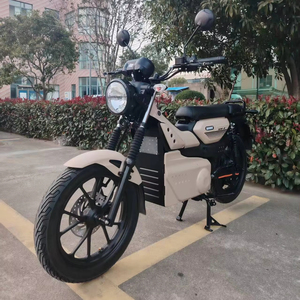
| Urban Commuter (L1e/A1) | 1.5 kW – 3.0 kW Hub | 60V / 72V 30Ah LFP | 45 – 65 km/h | 70 – 90 km | EEC L1e, CE, EN 15194 |
| High-Speed Street (L3e-A1) | 5.0 kW – 8.0 kW Hub/Mid | 72V / 84V 60Ah NMC | 80 – 110 km/h | 120 – 150 km | EEC L3e-A1, DOT, UN38.3 |
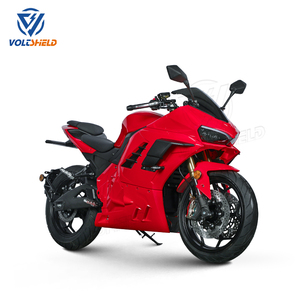
| Performance Sport/Cruiser (L3e-A2) | 10.0 kW – 15.0 kW Mid | 96V / 120V 100Ah NMC | 125 – 150 km/h | 160 – 210 km | EEC L3e-A2, EPA, CARB |
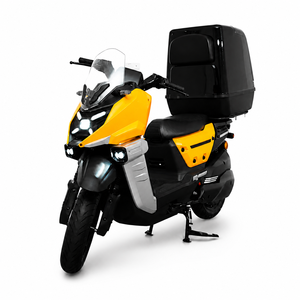
| Commercial Delivery / Heavy Duty | 3.0 kW – 5.0 kW Hub | 72V 80Ah Dual-Swap | 70 – 85 km/h | 130 – 180 km | EEC Commercial, CE, KC |
3. Enterprise Manufacturing Superiority & R&D Capabilities
Leading Chinese exporters have advanced well beyond simple contract assembly. Modern production facilities integrate robotics, automated SMT board soldering for BMS controllers, precision CNC chassis welding, and dynamic motorcycle chassis dynamometer testing. Partnering with a top-tier Chinese OEM manufacturer yields distinct operational benefits:
Full ODM Platform Customization
Complete flexibility over frame geometry, fairing aesthetics, battery tray volume, instrument cluster UI, and bespoke CAN-bus protocol integration.
International Homologation Support
Turnkey supply of laboratory test reports for EEC CoC (Certificate of Conformity), DOT registration, UL battery safety, and ISO compliance.
Modular Supply Chain (CKD/SKD)
Options for Completely Knocked Down (CKD) or Semi-Knocked Down (SKD) shipping formats to optimize freight costs and satisfy local assembly tariffs.
4. Future Sourcing & Procurement Trends for Global B2B Buyers (2025–2030)
As the international electric vehicle landscape matures, B2B procurement strategies are shifting from purely low-unit-cost purchasing to long-term lifecycle value and technological differentiation. Key emerging trends shape the future of adult electric motorcycle exports:
4.1 High-Voltage Architectures & Integrated Fast-Charging
The industry is transitioning rapidly from traditional 72V DC systems toward 96V, 120V, and higher automotive-grade architectures. High-voltage platforms reduce thermal loss, enable smaller wire harness gauges, and support Level 2 (Type 2 / SAE J1772) AC charging alongside DC fast-charging integration. Vehicles capable of replenishing 20% to 80% state-of-charge (SOC) in under 45 minutes are becoming standard requirements for North American and European distributors.
4.2 IoT Telematics, Smart Dashboards & Connected Fleets
Modern end-users expect seamless smartphone integration, keyless Bluetooth start, dynamic GPS tracking, and real-time diagnostic telemetry. Top Chinese manufacturers now build 7-inch TFT smart dashboards equipped with Android Automotive OS, Apple CarPlay compatibility, and integrated 4G IoT modules. These systems allow importers to offer Over-The-Air (OTA) firmware updates, remote battery health monitoring, and anti-theft tracking as value-added subscription services.
4.3 Synergies Between Retro Design Languages & Futuristic Powertrains
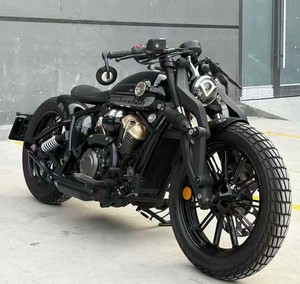
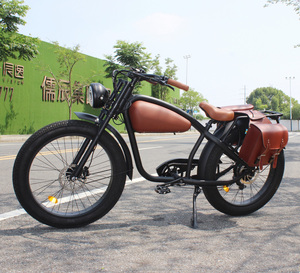
Market demand highlights an appetite for heritage-inspired styling fused with clean zero-emission performance. Modern classic cafe racers, urban scramblers, and classic bobber platforms—exemplified by iconic Swedish handcrafted designs like RGNT and premium Chinese exports—pair brushed metallic finishes and vintage leather ergonomics with high-torque electric drivetrains. This segment commands premium retail margins compared to standard utilitarian electric scooters.
5. Strategic Quality Control & Sourcing Checklist for Importers
To mitigate international sourcing risks, B2B procurement officers should implement a multi-stage Quality Assurance (QA) protocol when evaluating prospective Chinese manufacturing partners:
- Stage 1: Incoming Quality Control (IQC): Verification of raw battery cell grading (Grade-A cell sourcing from CATL, EVE, or BYD), BMS component validation, and frame structural integrity ultrasonic testing.
- Stage 2: In-Process Quality Control (IPQC): Robotic frame weld inspection, waterproof harness sealing checks (IP67 compliance), and motor stator insulation testing.
- Stage 3: Final Quality Control (FQC): Automated dyno benchmarking measuring peak kilowatt output, speed governor accuracy, regenerative braking calibration, and ABS actuation.
- Stage 4: Outgoing Quality Control (OQC): Rain-chamber ingress testing (minimum 30 minutes continuous high-pressure spray) and UN38.3 battery drop-and-vibration certification prior to container loading.