
Direct factory sourcing pipeline for electric dirt bikes, city commuters, high-power roadsters, and EEC-certified racing motorcycles.
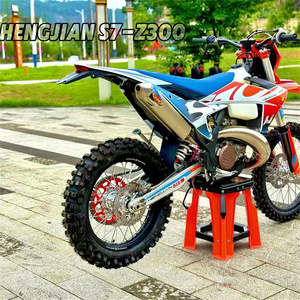
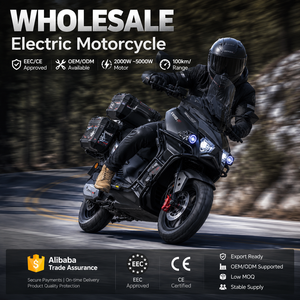
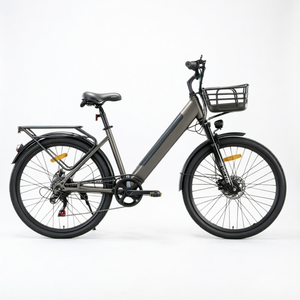
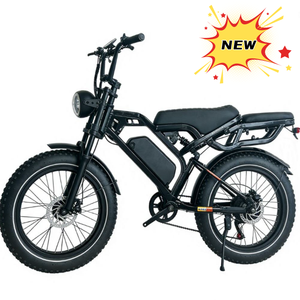
The global light electric vehicle (LEV) market is undergoing a seismic paradigm shift. Driven by municipal zero-emission mandates, expanding urban delivery logistics, and heightened consumer demand for long-distance commuter capabilities, traditional 1C charging speed limitations have become the primary bottleneck for commercial deployment. Sourcing from a premier China Fast Charging Bike Supplier is no longer just about acquiring hardware—it is a strategic decision to integrate advanced automotive-grade electrification into your local market distribution portfolio.
Historically, two-wheeler electric motorcycles and high-power ebikes relied on basic off-board lead-acid or standard 0.5C–1C lithium-ion chargers requiring 4 to 8 hours for a complete replenishment cycle. Modern commercial operations, fleet managers, and enthusiast riders demand rapid turnaround times. Leading Chinese manufacturers are now leveraging localized supply chain advantages in high-rate NCM (Nickel Manganese Cobalt) and thermal-stable LFP (Lithium Iron Phosphate) pouch and cylindrical cells to deploy 3C-to-5C fast-charging protocols capable of restoring 0% to 80% State-of-Charge (SoC) in under 35 minutes.
As a senior procurement director or vehicle importer, understanding the underlying engineering, thermal dissipation mechanisms, and regulatory compliance frameworks (such as EEC L3e/L1e, EN15194, DOT, and UL2271) is essential for mitigating risk. China's top-tier electric vehicle OEMs have successfully scaled automated pack assembly, integrating CAN-Bus connected Battery Management Systems (BMS) with high-voltage DC fast-charging interfaces.
Utilizing low-internal-resistance prismatic and pouch cells optimized for high current throughput, minimizing joule heating during 3C+ charging pulses.
Integrated Phase Change Material (PCM) heat sinks and micro-channel cold plate liquid loops ensure internal module temperatures remain below 45°C during rapid DC charging.
Automotive-grade Battery Management Systems monitoring active cell balance, multi-point temperature sensors, over-voltage cutoff, and short-circuit insulation isolation.
When selecting a high-speed electric motorcycle supplier or sourcing fast-charging ebikes, evaluating the power delivery system and charge topology is critical. Below is a detailed technical comparative matrix outlining structural performance across different vehicle segments:
| Electrification Parameter | Standard Commuter E-Bike | Mid-Power Sport Off-Road | High-Speed Fast-Charging Roadster |
|---|---|---|---|
| System Voltage (V) | 36V - 48V Nominal | 60V - 72V Nominal | 72V - 96V (High-Voltage Bus) |
| Battery Cell Rate (C-Rating) | 0.5C - 1C Standard | 2C Continuous Discharge | 3C Charge / 5C Peak Discharge |
| Charge Interface Standard | DC Barrel / XLR 3-Pin | Chogori / Waterproof Aviation Plug | Type 2 (IEC 62196-2) / CCS Combo 2 |
| 0% to 80% Charge Duration | 4.5 to 6.5 Hours | 2.0 to 3.0 Hours | 25 to 45 Minutes (Fast-DC) |
| Thermal Management | Passive Air Convection | Aluminum Heat Dissipation Plates | Active PCM Thermal Encapsulation |
| Homologation Category | EN15194 / EPAC | CE / Off-Road Enduro | EEC L3e-A1 / L3e-A3 / DOT |
To maintain a competitive edge in international distribution, procurement officers must align their inventory roadmaps with technological trends sweeping China's electric vehicle manufacturing hubs (Wuxi, Taizhou, Shenzhen, and Chongqing). The next 3 to 5 years will redefine performance metrics across the following vectors:
The boundary between four-wheel EV charging infrastructure and high-power two-wheelers is rapidly dissolving. Modern electric roadsters and racing motorbikes (utilizing 72V–96V architecture) are increasingly adopting Type 2 AC single-phase (32A) and DC Fast Charging adapters. This enables riders to plug directly into public charging grids across Europe, North America, and Southeast Asia without lugging cumbersome external brick chargers.
While high-rate NCM remains the benchmark for premium fast-charging bikes, Chinese OEM suppliers are initiating pilot batch production of Sodium-Ion (Na-Ion) packs for budget-conscious urban commuter bikes. Sodium-ion technology exhibits superior low-temperature performance (retaining 85% capacity at -20°C) and supports 4C fast-charging speeds without risk of lithium dendrite formation. Simultaneously, semi-solid-state lithium packs are entering the high-end off-road enduro segment, elevating energy density beyond 300 Wh/kg.
Hardware isolation is a thing of the past. Future-proof procurement requires integrated IoT Telematics Control Units (TCU). Utilizing CAN 2.0B or LIN bus communication, modern bikes continuously transmit real-time state of health (SoH), battery temperature gradient metrics, and GPS diagnostics to cloud platforms. Suppliers providing smartphone app integration, remote Over-The-Air (OTA) firmware updates, and predictive maintenance alerts allow B2B distributors to offer comprehensive fleet management SaaS subscriptions alongside physical vehicle sales.
Real-time cellular telemetry monitoring cell degradation, thermal spikes, and usage logs, allowing proactive warranty management for fleet operators.
Dual-mode architectures allowing instant battery swapping for last-mile delivery fleets while providing high-power fast-charging ports for long-range intercity travel.
Advanced electrolyte additives combined with silicon-carbon anodes enabling 1,500+ full 100% Depth-of-Discharge (DoD) cycles under accelerated 3C charging conditions.
Combining world-class engineering philosophy with agile, high-volume production capabilities, our manufacturing facility stands at the forefront of the light electric vehicle revolution. Derived from a heritage of precision craftsmanship and rigorous Scandinavian design standards, we seamlessly bridge high-end custom engineering with scalable OEM/ODM mass production.
Whether you require boutique small-batch custom releases with hand-finished detailing or scalable monthly production runs exceeding 10,000 units, our flexible assembly lines cater to regional brand requirements without compromising structural integrity.
Every battery module undergoes robotic laser nickel-tab welding, followed by end-of-line (EOL) automated load simulation, thermal imaging verification, and vibration stress testing according to UN38.3 standards.
We streamline international market entry by delivering turnkey regulatory compliance packages, including EEC L1e/L3e CoC certificates, CE directives, EN15194 reports, DOT compliance, and UL-certified electrical systems.
Our international technical support hub provides white-label diagnostic software, localized spare parts fulfillment center mapping, and direct engineer-to-engineer support for warranty claims and routine maintenance.
Essential technical and commercial insights for importers, distributors, and fleet managers.