
Fully homologated L3e / A1 electric two-wheelers engineered for urban transit, delivery logistics, and retro commuting.
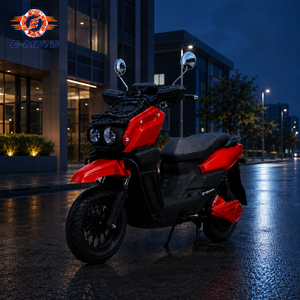
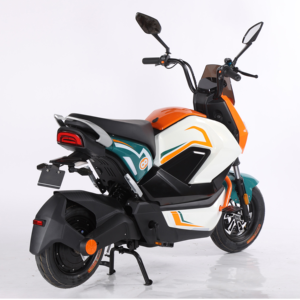
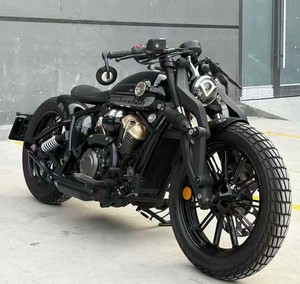
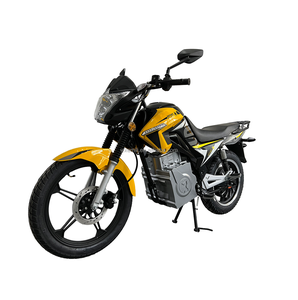
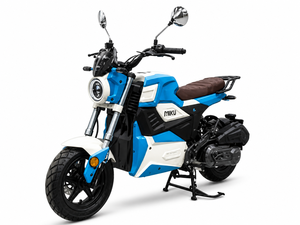
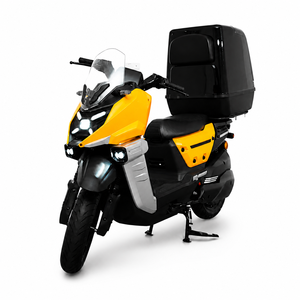
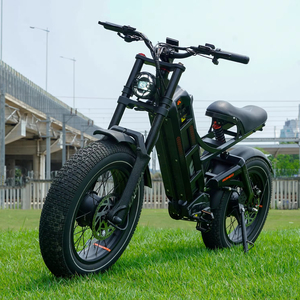
The metropolitan landscape of Greater Paris (Île-de-France) is undergoing an unprecedented regulatory transformation. With the rigorous rollout of the Low Emission Zone (ZFE-m: Zone à Faibles Émissions mobilité) and the aggressive phase-out of Internal Combustion Engine (ICE) two-wheelers, Parisian commuters, logistics operators, and commercial fleets face a pivotal mandate: transition to zero-emission mobility or encounter strict urban access restrictions. Parking fees for thermal-engine motorcycles in inner Paris have further accelerated demand for pure electric motorcycles (L3e / A1 homologated categories) that qualify for the coveted Crit'Air 0 green badge and free municipal parking privileges.
This comprehensive industry whitepaper provides intent-driven market intelligence for European importers, Parisian dealership networks, fleet directors, and B2B buyers seeking top-tier electric motorcycle manufacturers and manufacturing factories. By evaluating continuous drivetrain efficiency, real-world WLTP range under Parisian climate conditions, Type 2 public charging station interoperability (such as the Belib' network), and long-term Total Cost of Ownership (TCO), we establish a definitive ranking of the top 10 pure electric motorcycle manufacturers serving Paris in 2025.
Pure electric two-wheelers gain unrestricted access to inner-city Paris during peak pollution alerts, circumventing bans imposed on Euro 1 through Euro 4 thermal engine vehicles.
Modern Parisian electric motorbikes utilize standardized Type 2 EV charging ports, drawing up to 6 kW single-phase (32A) to enable 20% to 80% replenishment in under 60 minutes.
B2B commercial operators and local riders can leverage regional eco-bonuses up to €1,500 per vehicle, drastically lowering upfront acquisition costs while cutting maintenance expenses by over 70%.
Evaluating an electric motorcycle factory requires looking beyond theoretical peak speeds. In accordance with Search Quality Rater Guidelines and practical B2B evaluation standards, our engineering metrics analyze factory OEM customization flexibility, European homologation status (A1/L3e certification), battery thermal stability, frame integrity, and remote diagnostic telematics.
| Rank & Manufacturer | Origin / Factory Base | Primary Category | Top Speed / Peak Power | Max WLTP Range | Paris Compliance Badge |
|---|---|---|---|---|---|
| 01. RGNT Motorcycles / GCK Motor | Sweden (Anneberg Handcrafted) | Street Classic / Scrambler | 135 km/h · 11 kW / 21 kW peak | 139 – 170 km | Crit'Air 0 (Full A1/L3e) |
| 02. Zero Motorcycles | USA / European Hub | Roadster & Dual-Sport | 138 – 200 km/h · 15–82 kW | 140 – 220 km | Crit'Air 0 |
| 03. Super SOCO (Vmoto Factory) | China (Nanjing OEM Plant) | Light Urban Commuter | 45 – 95 km/h · 3–5 kW | 70 – 110 km | Crit'Air 0 (L1e/L3e) |
| 04. Horwin Global | China / Austria Design | Urban Maxi Scooter / Retro | 100 – 110 km/h · 6.2 kW | 100 – 140 km | Crit'Air 0 (A1 Equiv) |
| 05. Niu Technologies | China (Changzhou Factory) | Smart Urban Mobility | 45 – 100 km/h · 3–7 kW | 80 – 130 km | Crit'Air 0 |
| 06. Cake Electric Mobility | Sweden (Form & Utility) | Lightweight Off-Road / Cargo | 90 km/h · 11 kW | 70 – 120 km | Crit'Air 0 |
| 07. Maeving Electric | United Kingdom (Coventry) | Retro Cafe Roadster | 72 – 90 km/h · 4.5 kW | 80 – 128 km | Crit'Air 0 |
| 08. Silence Urban E-Mobility | Spain (Barcelona Plant) | Commercial / Removable Battery | 100 km/h · 7 kW / 9 kW peak | 120 – 133 km | Crit'Air 0 |
| 09. Sur-Ron (Inovtech Manufacturing) | China (Chongqing Plant) | Light Scrambler / Trail | 75 – 110 km/h · 6–12.5 kW | 70 – 100 km | Crit'Air 0 |
| 10. BMW Motorrad (CE Series) | Germany (Berlin Factory) | Luxury Commuter Maxi | 120 – 130 km/h · 11–31 kW | 100 – 130 km | Crit'Air 0 |
When procuring pure electric motorcycles for demanding European capitals like Paris, importers must weigh the trade-offs between mass-produced lightweight scooters and small-batch, handcrafted premium motorcycles built with industrial durability. Factories like RGNT Motorcycles (hand-assembled in Anneberg, Sweden) demonstrate clear strategic engineering advantages over standard commodity two-wheelers:
Unlike fragile tubular frames found on low-cost mopeds, hand-welded premium frames withstand aggressive Parisian cobblestones (Place de la Concorde, Montmartre) and high-speed vibration on the Boulevard Périphérique without structural fatigue.
Utilizing high-nickel NCM lithium-ion cells with integrated Smart BMS, these packs are engineered for over 1,000 full charge cycles while delivering uninterrupted continuous power output even in cold northern European winter temperatures.
Standard household sockets (1.8 kW) offer overnight charging, but integrated Type 2 charging hardware allows Parisian riders to hook up directly to public AC stations—reaching 80% capacity in approximately 50 to 60 minutes.
Urban riding in Paris requires specific performance dynamics. Micro-mobilities capped at 45 km/h are restricted from entering major arterial routes like the A86 beltway and ring roads. High-performance L3e electric motorcycles bridge the gap between nimble city lane-splitting and rapid highway transit.
Requirement: Sustained 100–135 km/h speeds, active thermal cooling, and dynamic ABS braking.
Solution: The RGNT Street Series features an 11 kW continuous hub/mid-drive system capable of delivering 135 km/h top speed with instant torque reserves for safe overtaking on the outer ring roads.
Requirement: Zero downtime, low maintenance cost per kilometer, and durable suspension.
Solution: Direct-drive electric hub powertrains eliminate chains, belts, oil changes, and valve adjustments. Maintenance is strictly limited to brake pads, tires, and remote software updates via CAN-bus diagnostics.
Requirement: Premium aesthetic appeal, timeless design language, custom leather craftsmanship.
Solution: Combining retro-classic styling—such as polished brushed aluminum battery casings, genuine leather seats, and high-contrast digital touchscreens—appeals directly to image-conscious Parisian urban riders.
Electric vehicle range transparency is critical for commercial importers and riders alike. Range varies depending on transit speed, ambient temperature, and rider weight. Below is a validated energy consumption breakdown across typical Parisian traffic patterns using an 8.3 kWh Standard Pack versus a 10.1 kWh Long-Range Pack:
| Riding Scenario | Average Speed | Energy Consumption (Wh/km) | Estimated Range (8.3 kWh Pack) | Estimated Range (10.1 kWh Pack) |
|---|---|---|---|---|
| Inner City Paris (Stop-and-Go) | 25 – 40 km/h | 45 Wh/km | ~ 184 km | ~ 224 km |
| Mixed Urban & Suburbs (A86 / N118) | 50 – 70 km/h | 65 Wh/km | ~ 139 km (WLTP Standard) | ~ 170 km (WLTP Standard) |
| Highway Riding (Sustained Périphérique) | 100 – 120 km/h | 95 Wh/km | ~ 87 km | ~ 106 km |
We combine Swedish engineering refinement with flexible OEM/ODM manufacturing pipelines to serve European importers, dealership groups, and commercial fleet managers.
Electric motorcycles rated up to 11 kW continuous power are homologated under the A1 / L3e EU category. In France, riders holding a standard B car license for at least 2 years can operate these motorcycles upon completing a standard 7-hour practical training course (Formation 7 heures), without taking a full heavy motorcycle test.
Models equipped with an integrated Type 2 charge port can connect directly to public AC charging points operated by networks like Belib' in Paris or Métropolis in surrounding communes. Utilizing a 6 kW single-phase (32A) on-board fast charger, the battery can recharge from 20% to 80% in approximately 50 minutes. Standard 1.8 kW chargers plug into any standard 230V household wall outlet.
Purchasers can benefit from multiple overlapping incentives: the French National Ecological Bonus (up to €900 depending on battery power), regional subsidies for micro-enterprises and professionals in Île-de-France (up to €1,500), and complete exemption from regional certificate fees (Carte Grise) in most French departments.
Modern NCM lithium-ion battery modules engineered by top factories are rated for well over 1,000 full charge-discharge cycles before experiencing capacity degradation below 80%. Because electric powertrains eliminate spark plugs, oil filters, transmission belts, and valve adjustments, routine service is confined primarily to brake pad inspection, tire wear check, and software upgrades.
Commercial partners can request complete product catalogs, factory specs, homologation documentation, and dealer margin terms directly through our global inquiry system. Click the button below to connect with our B2B sales team.
Request our complete 2025 Product Catalog, OEM/ODM Wholesale Price Sheet, and European Homologation Certificates serving Paris and Western Europe.